
Twin outboard motors revved as the 30-foot Contender saltwater fishing boat churned the choppy waters at the mouth of the Chesapeake Bay and raced toward an orange buoy with four anglers onboard.
Reducing the engines to an idle, the boat’s captain began a slow circling. To the east stood the Chesapeake Bay Bridge, to the west the bright skylines of Newport News and Norfolk had dimmed to gray against a bright blue August sky that Vincent Van Gogh would have been moved to paint.
The Atlantic Ocean’s salty water mixes with the fresh waters of the Nansemond and the Elizabeth rivers beneath the boat’s hull, creating one of the better spots for fishing in Virginia and along the East Coast.
These waters welcome more than sport fishers, however.
At 55 feet, Norfolk Harbor is the deepest commercial harbor along the East Coast, able to handle two-way ultralarge container vessels (ULCVs), which measure more than 1,200 feet in length and have a capacity greater than 14,501 twenty-foot equivalent units (TEU).
Three of these ULCV’s were visible in Norfolk Harbor as the anglers – most members of the United States Coast Guard – cast about for trophy fish.
It was a rare day of rest for a few fortunate members of the U.S. Coast Guard who most days are patrolling this same harbor, placing buoys and ensuring that the ULCVs and other cargo-bearing vessels who come in beneath the Bay Bridge aren’t carrying contraband or materials that could threaten the homeland.
The day chasing game fish was certainly welcome, but more welcome was the event that brought the service members and salt water fishing boats – 27 vessels that day, in fact, taking part in a fishing derby – to Norfolk.
A fundraiser to support the members of the United States Coast Guard.
Supporting Those Who Protect Our Waters
On the worst days – when storm swells toss and sometimes sink boats, hurricanes flood coastal areas, or unexpected problems leave water lovers stranded – the Coast Guard is there doing the hard, high-risk work of rescuing those most-directly affected.
Such is the public-facing view of the U.S. Coast Guard that many people have.
Susan Ludwig sees another side. As CEO and president of the Coast Guard Foundation, she deals daily with the distinctive struggles that service members and their families experience. That work is captured well in the foundation’s statement on its website: “Behind every rescue is a person carrying the weight.”
Ludwig, speaking with the Virginia Free Press at U.S. Coast Guard Base Portsmouth, said that one of the challenges that Coast Guard service members and their families face is that when disaster strikes in their communities, the service members are out helping neighbors even as their own family is facing the same challenge.
“The service members have to go save others,” Ludwig said, “while their families are left with some of this devastation.”
It’s a problem felt acutely by Coast Guard families. “Unlike the Air Force and the Marines,” Ludwig said, “Coast Guard members usually live in the communities they serve. They do not live on large bases.”
This is where the Coast Guard Foundation steps in.
“Within 24 hours,” Ludwig said, the foundation steps in ”with emergency funds” so Coast Guard families can rip down dry wall and have it replaced, or cover insurance deductibles, even while their loved ones are providing support for the community.
It’s one of the ways in which the Coast Guard Foundation supports service members and their families.
“We were started in 1969 by three Coast Guard veterans,” Ludwig said, as a foundation to support the Coast Guard Academy. Today, the Coast Guard Foundation supports all Coast Guard members and their families in three overarching areas: Education, Morale, and Emergency Tragedy Assistance.
In addition to supporting families through natural disasters, emergency tragedy assistance also includes being there for families in times of loss. “We like to wrap our arms around both the family and the crew members so that they can begin to heal together,” Ludwig said.
Whether the loss is in the line of duty, or through the growing issue of active-duty members dying by suicide, the foundation is there to “provide the funding for the services themselves and to fly either the family to the Coast Guard station or the Coast Guard members to the family location. The reason that we do that, Ludwig said, is “we found quite a benefit from both groups to be able to start to heal together.”
“The family members benefit from hearing about their son’s or daughter’s service, and the crew members benefit from learning how they grew up, and sometimes those connections that are made at these memorial services are lifelong.”
Delivering morale services and education services to Coast Guard families and members is also central to the foundation’s work.
“Historically,” Ludwig said, “we have given morale gear – either exercise gear or recreation gear – to Coast Guard bases” that isn’t covered in the appropriated budget.
Suicide prevention, marital counseling, and morale events are also central to the foundation’s work. “Under the morale umbrella,” Ludwig said, “you’ve got physical morale gear and mental resiliency, because we believe both are important to keep these folks ready for service.”
The foundation also provides educational support in the form of scholarships and grants for Coast Guard members, spouses, and children. This includes everything for money to attend college to summer camps for the children of Coast Guard families.
When Ludwig is talking to Coast Guard leaders and provides them the list of everything available from the Coast Guard Foundation, she leaves them with some simple advice.
If you remember nothing else, “please remember that if the worst happens, just pick up the phone and call the Coast Guard Foundation.”
A Growing Challenge
It’s a lot of ground for the foundation to cover, and the challenge is about to grow significantly.
As part of the Big Beautiful Bill, the Coast Guard is receiving a boost in funding of some $25 billion that will drive a 30 percent increase in its workforce – an additional 15,000 new members. That’s in addition to “the Arctic patrol cutters and the security cutters needed for the defense of this country,” Ludwig said.
That’s a big jump in service members and revenue. But the Coast Guard has a big task.
“They do a lot more than the average American understands,” Ludwig said. The amount of goods moving through Virginia alone via shipping accounts for about 10 percent of the state’s total economy. And it is the Coast Guard that ensures the safe movement of commerce through the ports.
“If you eat a banana, have a cell phone, you’ve been the product of receiving the benefit of the Coast Guard,” Ludwig said.
In addition, there is an environmental component to their work. And they are responsible for overseeing everyone who is out on the water for pleasure.
That growth in workforce means that the Coast Guard Foundation will need to grow significantly the amount of services it provides.
According to Ludwig, the Coast Guard Foundation will be doubling its revenue and tripling its Coast Guard support over a span of five years.
Heroes of the Sea
To reach those goals, the Coast Guard Foundation depends on corporate philanthropy to help grow the organization. Historically, corporations that are involved in maritime industries have been heavily involved in funding the foundation.
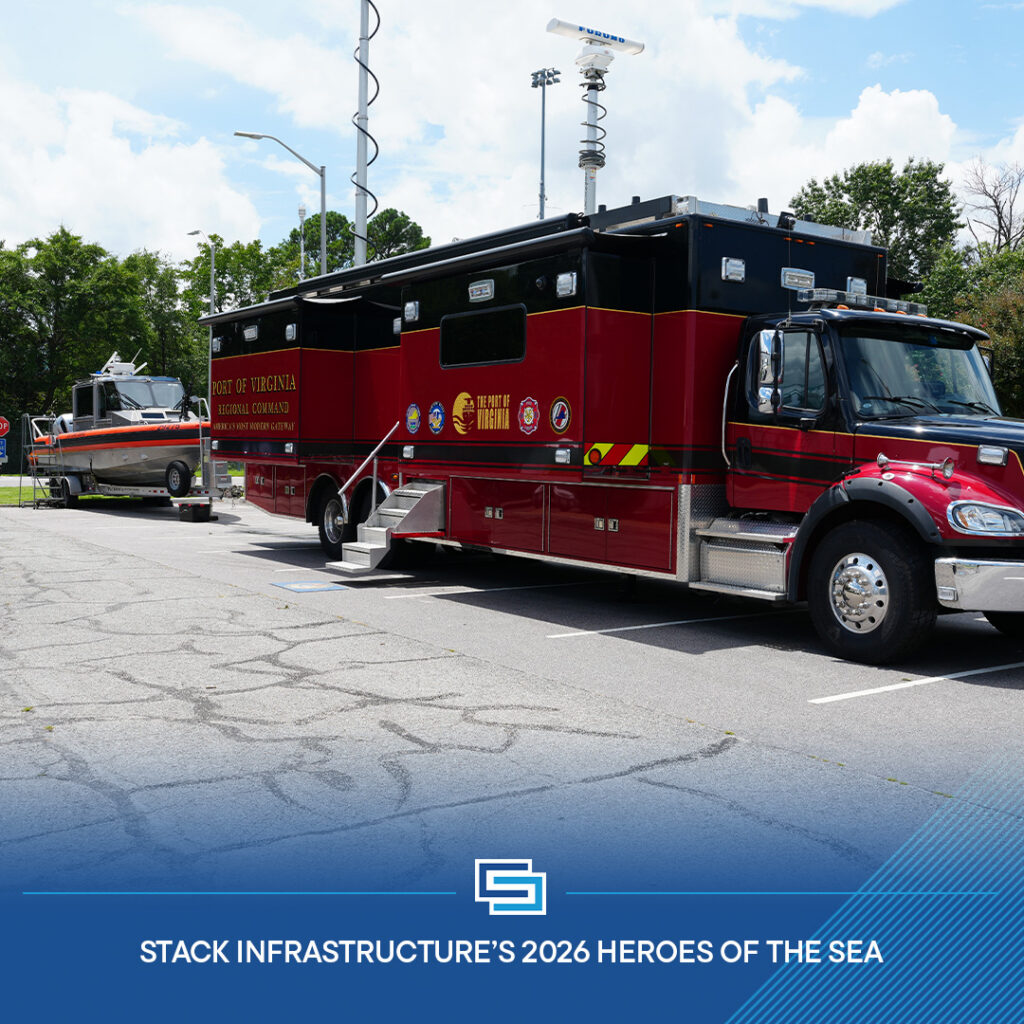
That support is now growing beyond the maritime world, and the most prominent example of this is the Heroes of the Seas fundraising event held for the Coast Guard Foundation in Portsmouth this August. The event is sponsored by Stack Infrastructure, a data center developer with no business ties to the maritime industry.
How the event, and Stack’s connection to it, grew is a story of supporting an employee’s vision and supporting those who serve.
The Heroes of the Sea this August marked its 24th year, and its first in Virginia. Traditionally, the event has taken place in Oregon, where nearly a quarter century ago technology executive Jim Linkous wedded a heart for salmon fishing with his passion for supporting the U.S. Coast Guard.
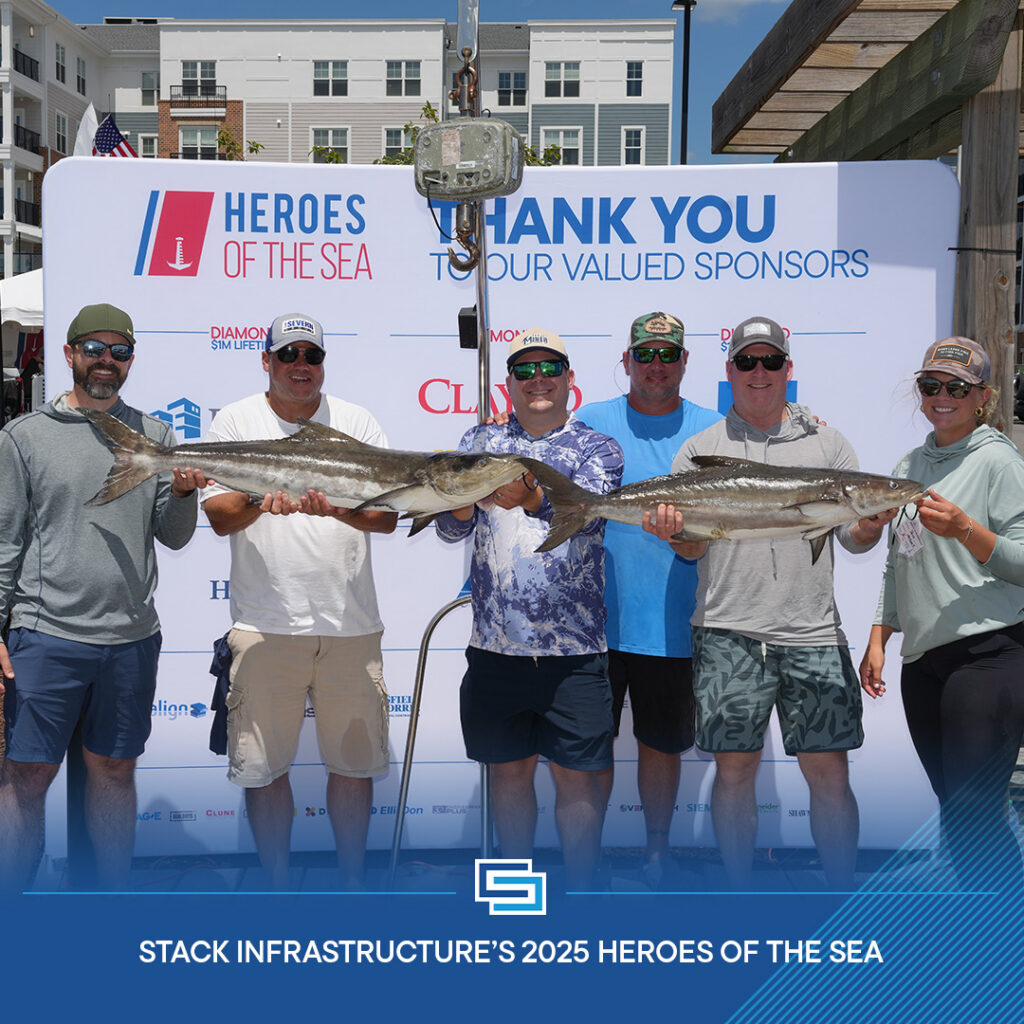
When Linkous launched the event in Oregon, it didn’t carry the Heroes of the Sea moniker. Rather, it was a simple salmon fishing derby held to raise funds for the Coast Guard’s Northwest Chief Warrant Officers Association.
The event grew in popularity and in the amount of money it was raising for the association. In the early years, the event raised several thousand dollars annually. Over time, that grew to tens of thousands, then hundreds of thousands, culminating in $2 million raised in 2026.
In 2015, Linkous joined Stack and brought the fishing derby with him. Impressed with the work, Stack made the decision that it wanted to grow the event and invest in it.
Speaking with the Virginia Free Press at the Heroes of the Sea event, Stack Chief Commercial Officer Ty Miller said that he asked Linkous for permission to make it a permanent event. With Linkous’ agreement the event was branded Heroes of the Sea. And the support for the U.S. Coast Guard Foundation began to grow significantly.
“As STACK grew, we had an opportunity to bring more people into something Jim had started with a tremendous amount of heart,” Miller said. “Our partners saw what this meant to Coast Guard members and their families, and they wanted to be part of it. The generosity has grown from there, and I think that says far more about this community than it does about STACK.”
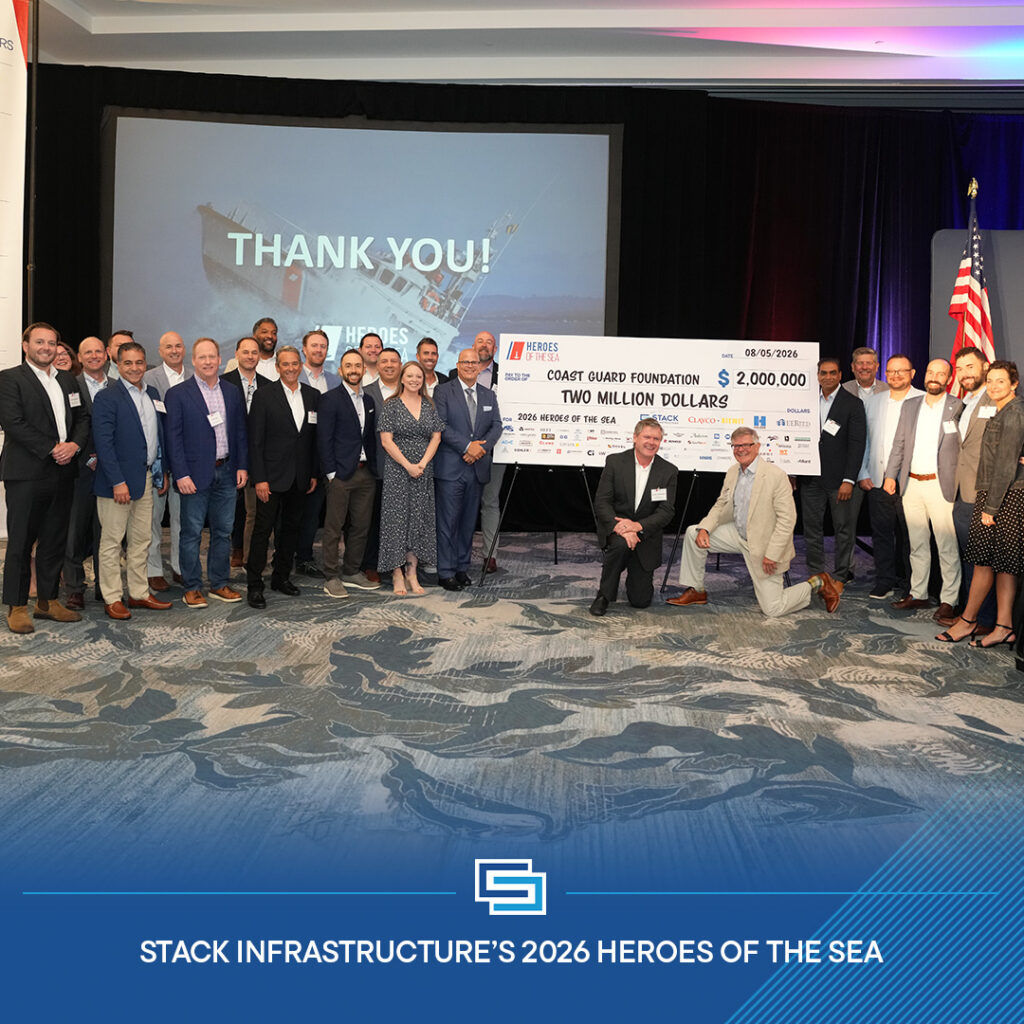
The 2026 event featured three top-level Diamond sponsors – Holder, EE Reed East Coast, and Calyco + Kiewit; three next-level Silver sponsors – Vertiv, ATS, and Hitt; and 60 additional sponsors.
The event resulted in a check to the Coast Guard Foundation for $2 million.
Ludwig said that the funds will be invested in an endowment so that they can be used in perpetuity. The foundation will spend 5% of the funds from that endowment each year, allowing it to grow over time and support all of the foundation’s programs.
An Interconnected World
That a digital infrastructure company would not only get deeply involved with raising money for the Coast Guard Foundation – a group that has no obvious business connection to Stack – but succeed in bringing in so many of its partners speaks to the changing understanding of the world we inhabit.
It has long been a euphemism that digital growth is making our world smaller. We tend to think of that shrinking world in terms of space – the ability to connect verbally and visually with people around the globe in milliseconds.
But this shrinking world is also drawing government, business, and philanthropy into a tighter orbit.
Stack got involved with the Coast Guard because of Linkous’ long connection to supporting the service members. That is motivation for Stack, but it’s unlikely on its own to attract partners.
“A lot of our partners initially came because they were curious about what we were building,” Miller said. “Then they met the Coast Guard members and their families and saw firsthand where their support was going. That changes the conversation. They come back because they know they can make a tangible difference for people who spend their careers serving others. There’s something deeply meaningful about that.”
Altruism for supporting a sound cause, in other words, can be a powerful motivator in corporate philanthropy.
In this case, however, the motivation goes a step beyond, and Stack and its partners who support Heroes of the Sea realize how dependent this shrinking world is on the people and organizations outside a business’ immediate orbit.
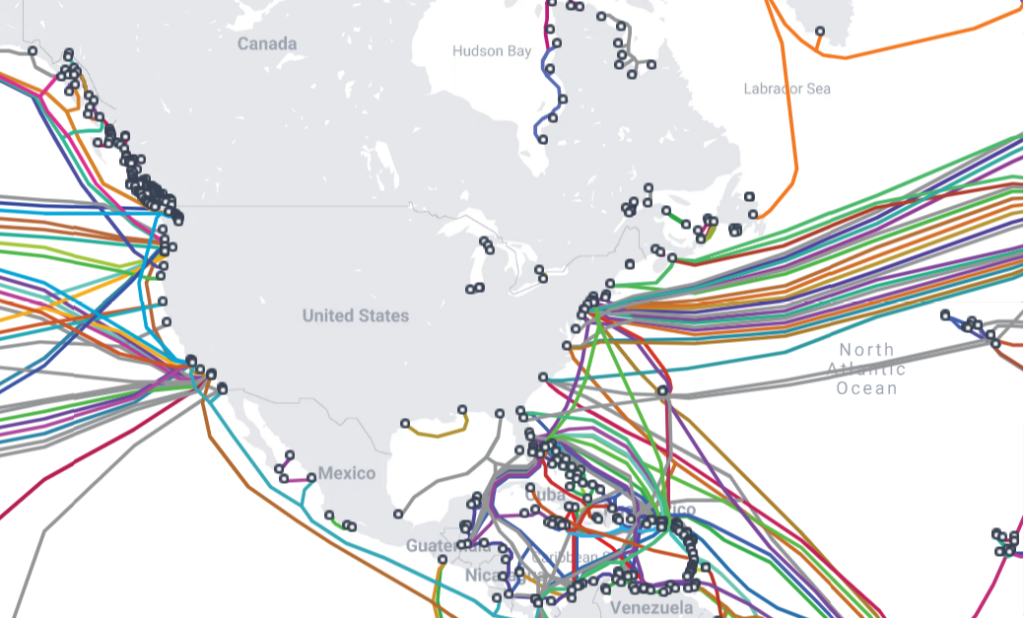
To understand how, Miller points to underseas cables.
When one looks at a map of the undersea cables, Miller told the Free Press, one quickly realizes that the world is connected by those cables. And they come ashore at cable landing stations.
While the Coast Guard isn’t charged with protecting those landing stations directly, “When you look at a map of the sub-sea cables connecting the United States to the rest of the world, you realize quickly digital infrastructure doesn’t begin and end at the walls of a data center,” Miller said. “Those connections cross oceans and come ashore in communities where the Coast Guard has an important maritime security mission. We operate in different worlds, but we both contribute, in very different ways, to the resilience of the systems and communities people depend on every day.”
Realizing that indirect connection Miller said, “There was an ‘aha’ moment for me when I recognized there really is a mission nexus,” Miller said. “We talk about digital infrastructure as being essential, but none of it exists in isolation. It depends on physical networks, ports, coastlines, communities, and ultimately, people. The Coast Guard reminds us resilience is a shared responsibility. Once you see the connection, supporting the people who serve becomes a very natural thing to do.”
Enabling people to understand how interconnected we are has proven a powerful force for good for the U.S. Coast Guard, and for the industries that support Heroes of the Sea.
Such is the promise of the digital future – a world where more people connect, build bridges, and learn to cooperate.
“This started because one person cared deeply enough to do something,” Miller said. “Jim created it, and our responsibility was to listen, get behind him and help it grow. That is still what makes Heroes of the Sea special to me. STACK may provide the platform, but the generosity comes from hundreds of people and partners who choose to show up for Coast Guard members and their families.”
That promise became visible this year on the waters around Norfolk, Virginia. By continuing to return, Stack, its partners, and the Coast Guard Foundation are doing more than good, they’re paving a new pathway for understanding how philanthropy can significantly impact society for the better.
Perhaps Ludwig put it best.
“Miller started a ripple effect,” she said, that brings business leaders, Coast Guard leadership, and junior Coast Guard members together. The point is not to have a dinner, some wine, and hear a story. “Rather, it’s having people see the story.”
And when one sees the story, the connections we share can’t be missed.