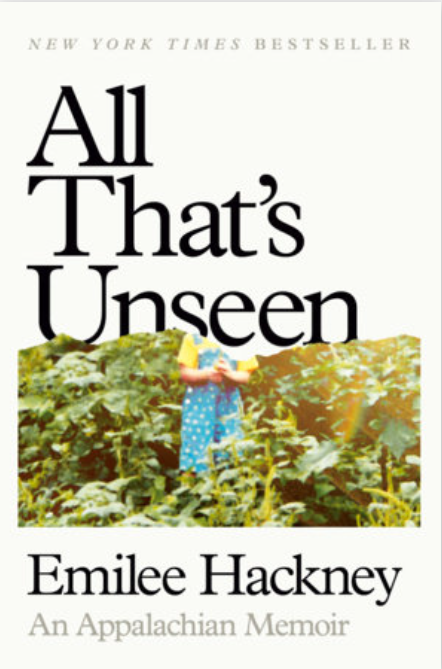
The New York Times this summer heralded the arrival of a new Southern literary voice. Emilee Hackney is a native of the mountains of Southwest Virginia, as were her parents, and their parents, and their parents before them.
Her memoir, All That’s Unseen: An Appalachian Memoir, is the story of her journey from Tazewell County to Harvard University then Vanderbilt University, and back to Virginia. Along the way she encountered Pentecostalism, a man four-years her senior she nearly married out of high school, a Subway co-worker trapped by circumstances who helped her find her footing following her breakup, condescending classmates and professors at Harvard, and a teacher who helped her discover her voice.
The book plumbs the wisdom of the mountains, which both inspires the soul and too often limits potential, through the eyes of a now-29-year-old young woman still finding her way in the wider world.
On Monday, Hackney sat down with the Virginia Free Press to talk about her new book.
The interview has been edited for length.
Virginia Free Press: Memoirs often are written as people look back on life in their later years. All That’s Unseen was written in your 20s, and is your first book. What advantages did you discover in writing a memoir so early in your life and career?
Emilee Hackney: I think the best advantage is that I’m so close to the material I’m writing about. A lot of things I remember pretty well. There are conversations I could recall that I was able to write word-for-word in the book. If I tried to write this book 10 to 20 years from now, I would not remember those conversations.
That’s not to say that all the dialogue in the book is spot-on, but there are some conversations that I remember just perfectly, and there are some details that I remember really will – I’d say most of them – because I’m only writing this book a few years out from when they happened to me.
I think that’s one of the big advantages to writing so close to the actual events.
There are disadvantages, too. Your perception of your life changes as you get older and I know that this book would be a very different book if I wrote it 20 or 30 or 40 years from now.
I think any iteration of the book would be different based on when I write it in my life, but I also think that it’s kind of valuable to write it when I did, to understand my perspective now, as a 29-year-old, as opposed to waiting.
There’s a story to be told there that is worth telling now.
I don’t feel like we have enough memoirs that are written so close to the material. There’s value in having a diversity of voices and ages writing about their lives.
VFP: Your book does a really good job of teasing out the nuances of Appalachia, something that comes through early in the work when you talk about the differences between Tazewell County and neighboring Buchanan County. It’s easy for outsiders to look at a map and assume places are similar because of their geographical proximity, but you show that clearly isn’t the case. Why was it important to do this?
Hackney: I live outside of Charlottesville now, and even here, which is only about 3.5 hours outside of Tazewell, people just have this very flattened perception of what Appalachia is or Coal Country is. They think of it in very broad terms that usually incorporate stereotypes, because that’s what’s perpetuated by the media and has been for decades. So people do think about Appalachia, where I’m from, as a whole thing. They don’t really know the nuances.
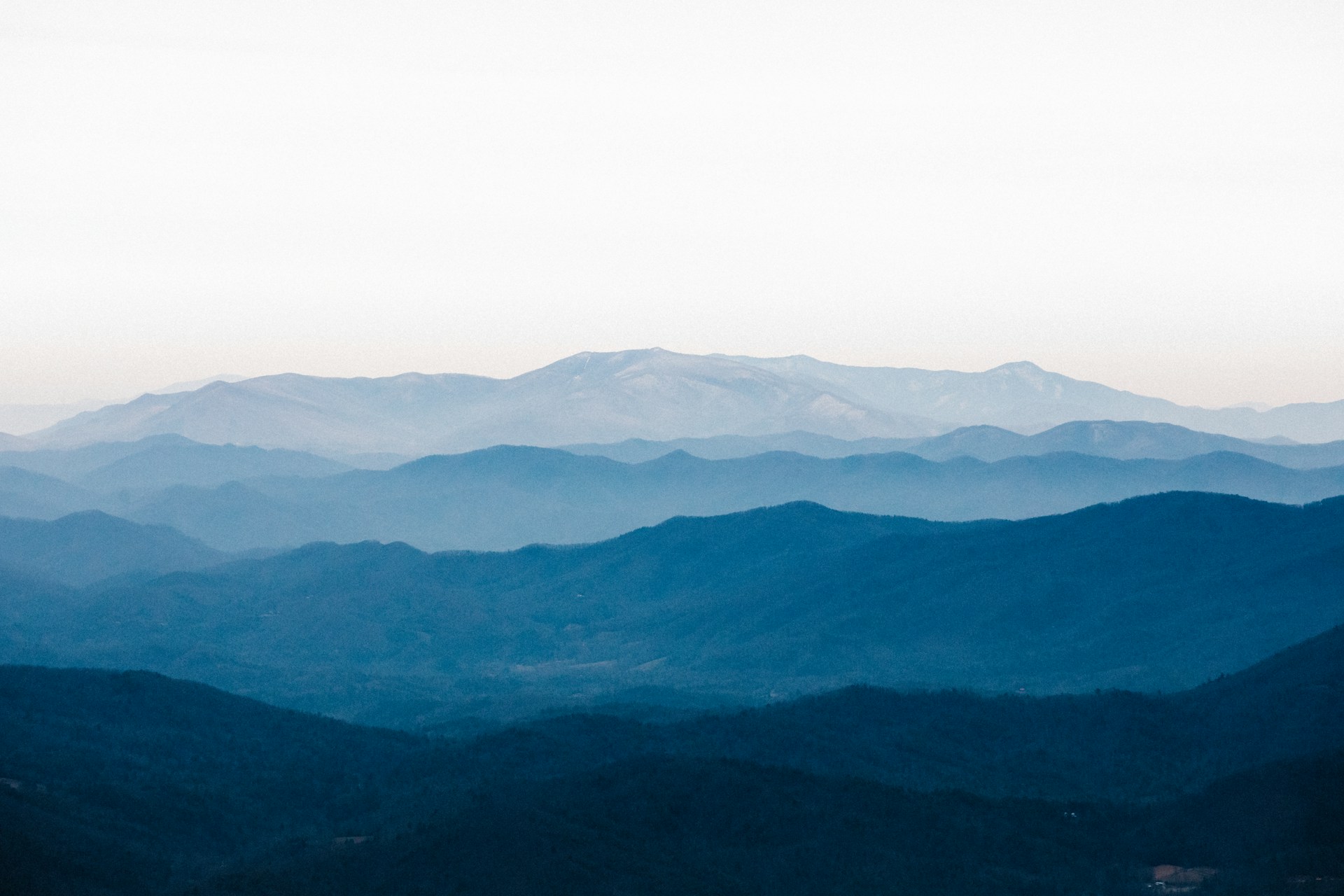
That’s why I wanted to make clear that Tazewell, which is half coal mining, half agriculture, is very different from Buchanan County, which is all coal mining. That’s something that unless you are from there, you probably don’t understand. You don’t know how two communities that are so close together as the crow flies can be so different, because the mountains have this power in the way they isolate you and they isolate communities, which create their own cultures.
VFP: Is it just the media that is to blame for this flattened perception of Appalachia that most people have?
Hackney: I’m sure it’s more than that, but it probably started with the media. I talk a little bit in my book about a Life Magazine spread that they did in 1964 because of the War on Poverty, and that became a thing. Then all these media outlets came into Appalachia and did these photospreads and documentaries. So it started with that.
But once that gets in people’s heads, it’s like a word-of-mouth thing that the majority of people believe. Who would want to challenge that stereotype or understand something different? Why would you want to, or care enough to?
For that reason, it became the collective consciousness of America, became ingrained in us, and was passed down through photo spreads and TV shows and the like.
VFP: Did you ever worry when you were writing the book that it was going to be pitched and sold as just another tale of a poor Appalachian girl who leaves the mountains, goes to Harvard, and finds success? That type of story is its own sort of stereotype.
Hackney: I know there are people who have stories like mine; maybe not with my particular religious background or my relationship to Coal Country, but there is a certain appetite for this kind of story.
We like to read about unlikely success stories, you know, and I understand that that’s kind of what my story is. That’s totally fine with me. I’ve gotten a lot of messages from students who are thinking about transferring or wanting to transfer to an Ivy League school from community college like I did. I also get messages from high school students with these really high aspirations but come from disadvantaged backgrounds. I love those messages because it makes me feel like I’ve done something good, because they read my story and it offers hope for them too.
You know, when I was at high school and community college, I don’t recall ever reading any story about somebody who had aspired to something much greater than their circumstances would usually allow.
I’m glad that people have found that story and found hope in it. That they, too, can set their sights on something big, that it’s not entirely impossible, because there are a lot of messages to students from disadvantaged backgrounds that say, you can’t do this, or you can’t achieve that. I think these stores are valuable to tell kids that they can.
VFP: Did you apply to in-state colleges?
Hackney: Yes, and in an earlier draft of the book I might have mentioned that.
VFP: Why did you end up choosing Harvard over UVA or Virginia Tech?
Hackney: Well, they gave far more financial aid than any other college, even Columbia. They were beyond generous. I think I was on maybe 96 percent or 97 percent financial aid, I don’t even remember now, but it was enough for me to be able to just work 20 hours a week or whatever through the semester to be able to pay my own tuition.
VFP: You write beautifully about the people in Tazewell, especially your family and your friends. But there are parts of this book that are really difficult to read. Especially some of the struggles you had with your fiance, and your experience for a brief time falling into sex work while still a student at Harvard. How difficult was it to write about these experiences, and is there a message that you hope people today take from your experiences?
Hackney: I debated back-and-forth about putting that in the book.
Ultimately it didn’t feel honest enough without it. It felt like lying by omission. I think it was important for people to see the negative effects that growing up in this really difficult religious environment had on me, as well as this difficult relationship. It was like a crash and burn thing that affected me mentally. I guess i just wanted to be really honest about how things like that could affect a person, affect a young woman, because I know I’m not the only one that’s left a fundamentalist religion and gone in the opposite direction.
I didn’t want to pretend like I was handling it well or dealing with it very well, because I wasn’t. I was in a very bad place, mentally.
So yeah, I just feel like I had to be honest about that.
Growing up in the church I did, in the culture I did, we didn’t talk about such things. Some things are just so hush, hush.
In a way, I guess, writing about this is kind of pushing back against that message that I learned as a kid that we don’t talk about certain things. Because everybody has a really messy life, right?
I find it refreshing when I read about somebody else’s bad choices or mistakes, because we’ve all done them.
The message that I was trying to send is that life is not pretty and people make a lot of bad decisions and bad mistakes. Maybe it’s important to talk about them, to see the real-life effects that religion and bad relationships – all the things that go into creating a young woman’s psyche — have.
VFP: You’ve come from a very traditional upbringing where gender roles are clearly defined, to your current reality where you are pushing back on many of those ideas. What do you make of the movement to return to traditional gender roles?
Hackney: We’re all people in progress. I get it because I used to really idealize what would now be called the Trad Wife movement. That’s not what it was called 15 years ago when I was really getting deep into this bad relationship at church.
I understand the appeal to have the answer to this moral question of What’s the purpose of our lives? What does it mean to be a good person? I understand why people would be attracted to these traditional values because it seems to have an answer for a lot of questions that we struggle with.
So I get it, I get why people are attracted to it. But having lived through what that actually means and what it means to adhere to that as a woman in a relationship like I went through, it’s obviously not all it’s cracked up to be. So I feel bad that this ideology is being pushed by social media and being promoted by influencers. Young women, young kids that don’t know anything about it and see it as this answer really don’t know what they’re in for.
I feel like we as a society go through cycles of progressivism and conservatism, it happened multiple times ever just the past 4 or 5 generations, so I hope that we swing back in the opposite direction, at least a little bit, soon once people start seeing that this movement isn’t all it promises.
VFP: Was social media a thing for you when you were in high school?
Hackney: I had a MySpace account, and then I had a Facebook account for a while, but I was very careful about my internet usage because I thought the internet as a whole was very sinful.
VFP: Is your story about getting out, or is about something deeper?
Hackney: It’s about that, but it is about more than that. It’s about reckoning with what getting out means, what returning means, what hope means as a whole. I leave it as an unanswered question, because I don’t know that you can fully have answers to those questions. You can’t even describe what any of those things really mean because there are so many different aspects that go into your understanding of those terms.
VFP: Jeremy is a person you met working at Subway and befriended after you broke off your engagement and began separating from church. His story doesn’t have your happy ending. And yet, he was clearly an important piece of your life. Do you think Jeremy wants to leave?
Hackney: I don’t know that Jeremy didn’t want to leave, it just wasn’t really a possibility, and therefore I don’t think it was even on this radar because they’re just so many barriers to leaving when you’ve grown up in a really difficult home situation. I think he was on his own at 14.
And you’re working a lowing paying job, and your whole support system is people who have made really bad decisions, or struggle with addiction, struggling with housing. That’s all he knew and didn’t have anybody that was able to show a different way.
I would say that I got really, really lucky with Harvard. I got so lucky because I did not have anybody telling me to apply to this college.
As you read in the book I applied a little bit out of a spate, and that was just a huge stroke of fortune.
I could have easily stayed in Taswell and never left had that not happened, or got married, or whatever.
So yeah, my story is about getting out, but it’s about luck in a lot of ways. It’s about what life looks like when you do get out versus the people that aren’t able to. I was just reflecting on why I did it, how that was possible, and what returning looked like after you leave.