According to data from the United States Department of Agriculture, food insecurity in the United States affects 13.7 percent of households.
A new study will force policymakers and everyday citizens to rethink that information.
Through direct interviews with 5,600 Virginians, the study found that more than a quarter — 26 percent — of households in Virginia are experiencing “very low food security,” which is defined as people reporting “multiple indications of disrupted An additional 15 percent report “low food security,” defined as “reduced quality, variety, or desirability of diet.”
That means 41 percent of Virginians are struggling to meet their dietary needs.
Commissioned through a partnership between the Federation of Virginia Food Banks, the Virginia Department of Social Services, Virginia Tech, and No Kid Hungry Virginia, the study was conducted by the independent social research organization NORC at the University of Chicago.
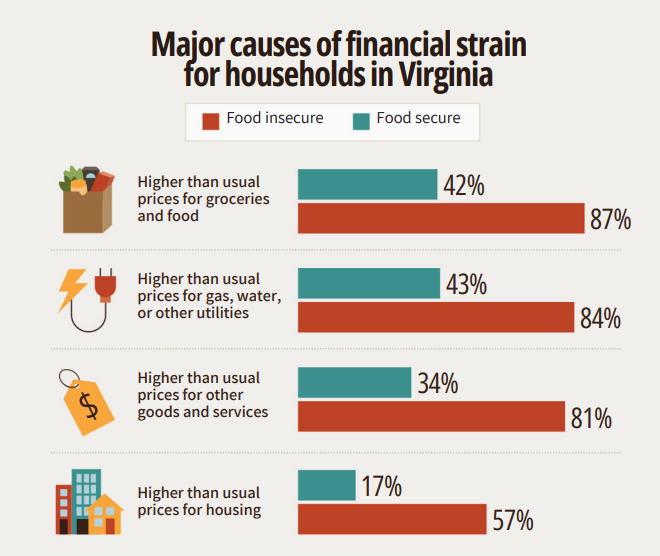
Going beyond the numbers of people struggling, the report explores the extent to which prices are driving the problem. Asked how much of an impact higher prices for food, utilities, housing, and other goods and services were having on their household finances, respondents revealed inflation’s impact on their household budgets.
Among food insecure people, 87 percent that higher prices for groceries and food were straining their household budgets. Strikingly, 42 percent of food secure people said the same.
Black and Hispanic families are being particularly hard-hit. The study reports that 33 percent of white households are food insecure, but 53 percent of Hispanic households and 63 percent of Black households struggle to provide enough food.
With reductions in SNAP (formerly known as “food stamps”) looming, the report notes that recipients report the program accounts for 52 percent of their household food budget.
This is a breaking story, and the Virginia Free Press will have more on this in coming days.