
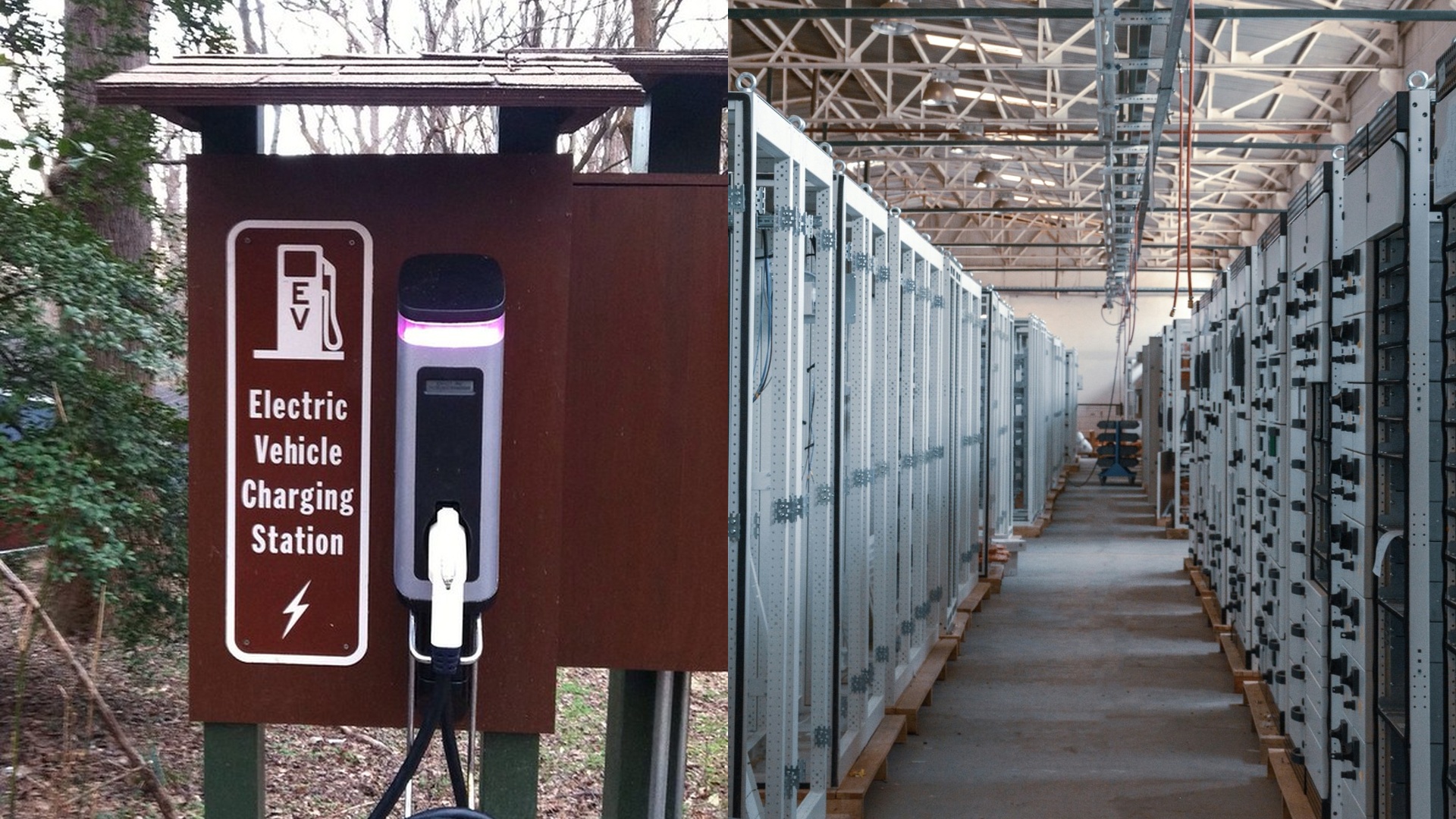
The first time I drove an all-electric vehicle was when working at U.S. News & World Report in the automotive division.
There was a lot to pay attention to and evaluate.
The oversized touchscreen on the center console was eye-catching, and took some getting used to. The quiet while driving was noticeable, and for someone accustomed to the sweet growl of a powerful engine, a bit unsettling. And learning to stop without touching the brake was a challenge.
But the real attention-getter was the acceleration. Touch the pedal, and all the potential energy was there. No turbo lag. No engine rev. Just raw power propelling a vehicle forward.
From that moment forward, I was an advocate not just of EVs as driving machines, but EVs as a necessary environmental transition. Transportation is the major driver of carbon emissions.
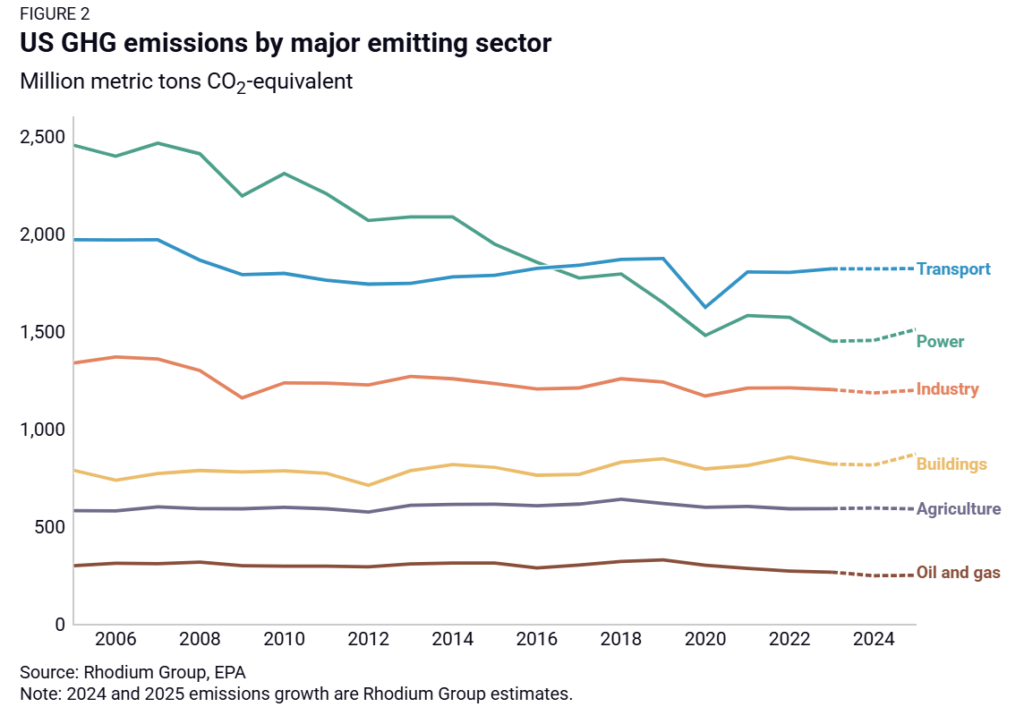
While the goals of rapid EV adoption have proven more challenging than environmental advocates like the Drive Electric Campaign and Environment America are pushing, the country was tracking in a positive direction.
That momentum will likely be slowed by the Trump administration significantly weakening the fuel economy standards (CAFE) that American automakers are charged with reaching.
The less-known reality about the transition to EVs, however, is that there is a longer-standing obstacle to full EV adoption than the recent change to CAFE standards – the power grid.
In an email exchange with Dr. Ali Mehrizi-Sani, director of the Power and Energy Center at Virginia Tech, he noted that “if the transportation sector (vehicles, trains, airplanes, ships, etc) were to completely electrify, that would need twice as much electricity as we generate today.”
That statement does require qualification.
Mehrizi-Sani continued: “such [a] move would not happen overnight, rather over a few decades, and of course it would need societal and policy buy-in as well beside the technological advances required to match the energy density of carbon fuels.”
Nonetheless, the reality of the energy generation challenge facing EVs is clear.
While the transportation sector’s energy challenge can be discussed in speculative terms for now, that challenge is currently playing out in real-time in the data center sector.
Canary in the Coal Mine
The challenges confronting the data center industry today – too little energy generation, too old a delivery infrastructure – are the challenges that await the transportation sector as it continues to move toward electrification. (Nota bene: While Trump’s efforts to rollback the EV industry will significantly slow American adoption, many see this as a temporary setback given that the transition to EVs is a global phenomenon.)
As such, data centers are a canary in the coal mine as America moves to address climate change by reducing carbon emissions.
The lesson will sound counter-intuitive. The two sides that are frequently pitted against one another in the political arena — data centers vs. EVs/environmentalists — face a similar dilemma. And the solutions the two are finding to address the energy challenge stand to benefit both groups.
Building the Renewable Infrastructure
Innovation is the key to both the data center industry and the EV industry successfully securing the power they require. And this will necessitate advancements across a number of platforms.
While generation will have to increase, there is considerable power to be gained by making the existing system more efficient. One such company working on this issue is AssetCool, which has developed a robotic system that applies a coating to power lines that can increase energy by megawatts without having to replace lines.
AssetCool is one of several companies that partnered with the Dominion Energy Innovation Center (DEIC) to accelerate new technologies that promise to both lead to more energy generation as well as better capture the energy already being produced. The faster groups like DEIC help find and grow more energy innovators, the faster the country can transition to things like electric vehicles.
The relationship is not one-sided, however. The data center industry is benefitting from innovations in the green-energy sector.
Auto manufacturers like General Motors have developed innovative battery storage technologies in their work with EVs. With the sale of electric vehicles lagging, the company is transitioning that knowledge to making large batteries for data centers and large-scale energy users.
As the New York Times reported in June, “The batteries, which can be the size of shipping containers, store excess energy from solar panels, wind turbines and other power sources. Utilities, data centers and other big energy consumers use them for backup power or to manage fluctuations in electricity supply or demand.”
On the generation side of the ledger, renewables will be an important part of the equation.
While the current administration is slowing the deployment of renewable energy sources, its importance in the future of American energy isn’t waning. Renewables accounted for 24.1 percent of energy generation in 2025 according to the Energy Information Administration. And the data center industry has played an important role in the renewable energy buildout.
Mehrizi-Sani, citing BloombergNEF, told the Virginia Free Press that “large data center developers accounted for 72% of clean power procurement by corporations in the Americas region via power purchase agreements in 2025.”
That number does have to be qualified, he continued “as at least part of this share is driven by regulatory and technical requirements for data centers to bring their own generation.”
The largest solar farm in Virginia, indeed, the largest west of the Rockies, is in Spotsylvania County. A key part of the deal that brought the farm to Virginia was Microsoft’s commitment to purchase 315 megawatts of solar energy from the facility.
Pushing in the Same Direction
In the political environment, the environmentalists and the data center industry are too often pitted against one another. However, the two share a common problem – a need to produce more energy to meet their respective goals.
The Virginia Free Press put the question directly to Mehrizi-Sani: “Are data centers and EVs both essentially pointing to the same problems? Too little energy production, and too antiquated a grid system?
“Yes,” he replied, “to an extent.”
The challenge is not simply having too little energy or an antiquated grid, he said, “rather, we increasingly need more electric power generation and transmission capacity that can deliver power both where and when it is needed.”
He explained that while it may be possible to generate more energy in one location, it has to be moved to where the loads demand, and currently, he wrote, “we don’t have enough transmission capacity to get power from A to B.”
Consequently, “while both data centers and EVs do require more power, they point to different aspects of this challenge.”
Data centers, he said, need hundreds of megawatts reliability delivered to a fixed location. EVs are more flexible both as to “when and where they need power (e.g., charging can be shifted to off-peak overnight periods).” Further, “since they are essentially batteries on wheels, they potentially help the grid with smart load management.”
Mehrizi-Sani added, however, that “data centers, with their onsite generation and battery backup systems, can potentially offer a similar type of help, but the economics are very different.”
Delivering the Power
As Virginia and others continue to figure out the best way forward in handling data center growth, EVs serve as a reminder that resolving the energy challenges data centers face could potentially accelerate the economy’s move to a carbon-free environment.
More electrical generation, improved transmission, and increased energy efficiency will be essential not only to powering the digital revolution, but powering the transition to a net-zero carbon economy.
Getting that right, like stepping on an EV accelerator, will juice not just data centers or EVs, but the American economy as a whole.