
While data centers continue to burn bright across media headlines, with near-daily stories about moratoria and marches and surveys touting extraordinarily high percentages of people who don’t want data centers near them, there is mounting evidence that the people’s feelings about data centers are far more nuanced than the headlines and some of the surveys would suggest.
Earlier this month the National Security Institute at the University of Virginia unearthed some of this nuance by asking not who is against data centers, but asking who is for them?
The results showed a number of factors that will shape how people feel about data centers.
Among the findings:
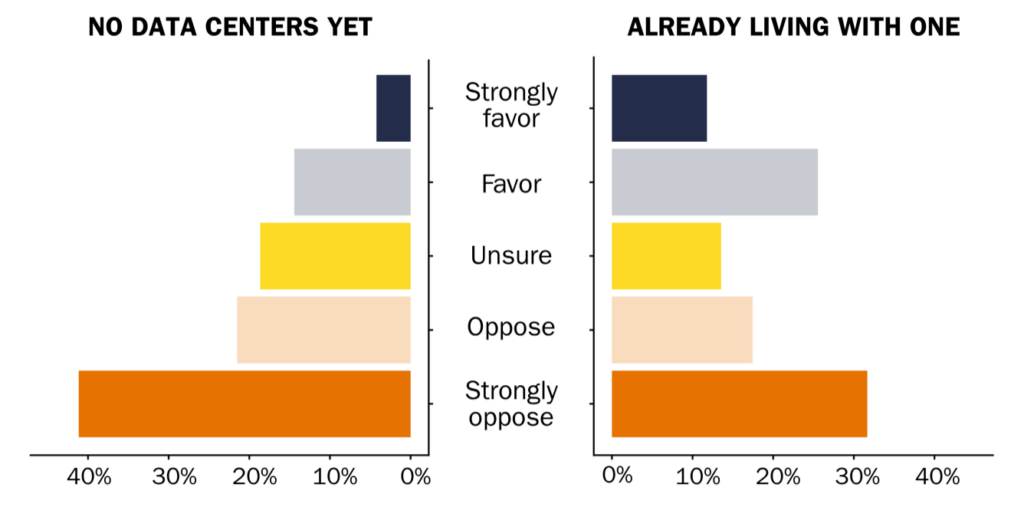
- People who live near data centers are more likely to support them
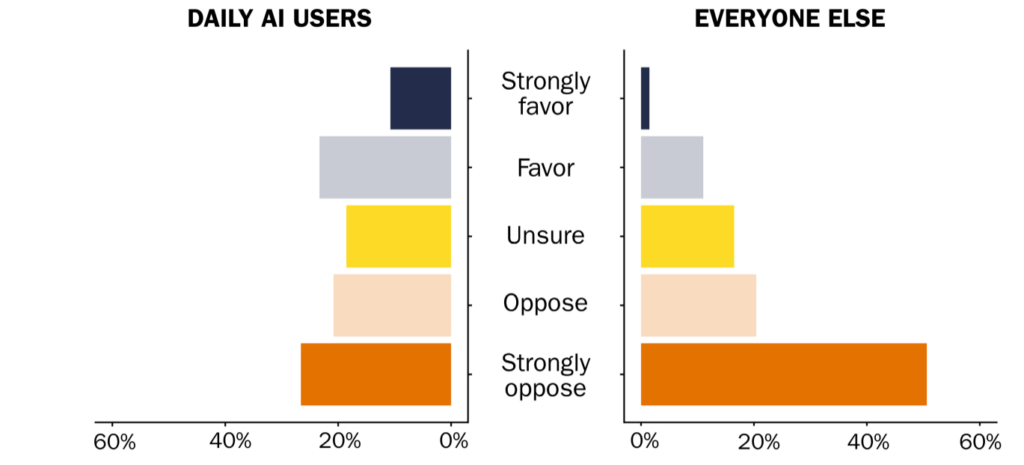
- Artificial Intelligence users are more likely to favor data centers than non-AI users
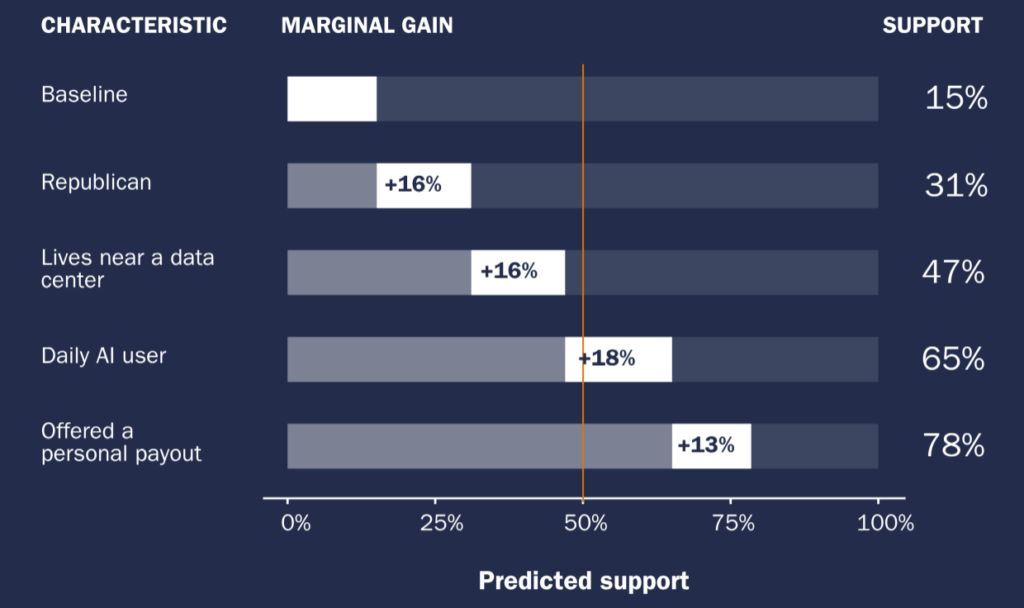
The report also found that “Two other features had predictive value: leaning Republican and being promised a cash payout from the data center (in our assigned investment condition). We combined these predictive variables to fit a linear model that predicts likelihood to be a supporter or non-supporter. Each of the four independently and significantly predicted support, and each added a similar boost.”
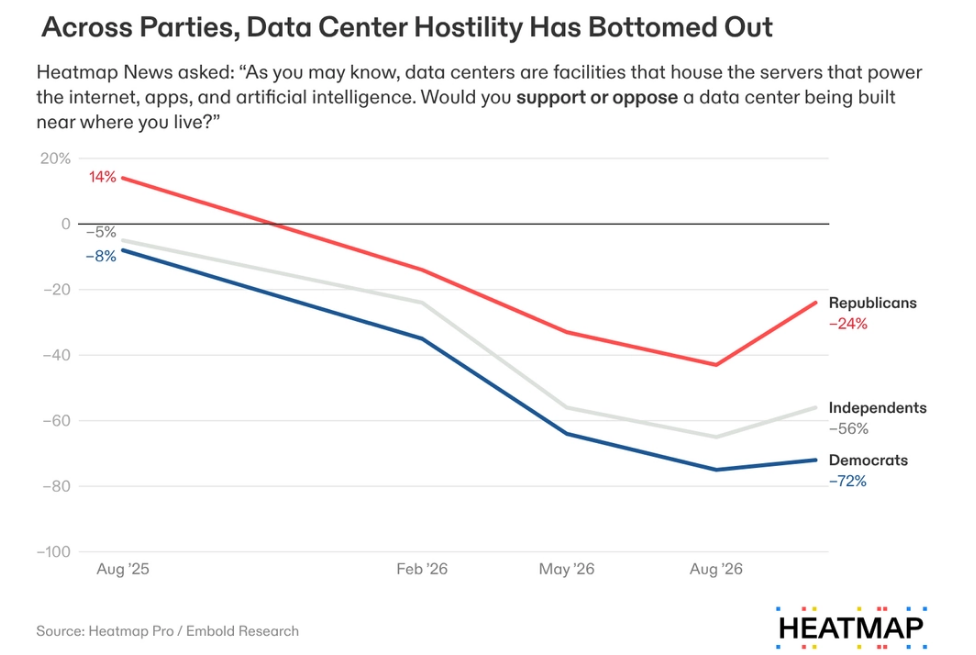
The HeatMap survey also found movement among men. “In August, 21% of men said they would support a data center being built near where they live,” the report said. “Now, 28% of men would support one.”
“A data center can’t change how a community votes or how often its residents use AI,” the UVa study concluded. “It can choose to build where data centers already exist, and it can pay residents directly. Those two levers alone raise predicted support from 15% to 44%. That’s nearly triple the baseline, but still short of a majority. This means that choices about where data centers go, and policies about how they engage the communities around them, are among the few levers that can move public support.”