

As a true election nerd nerdling along here in Election Nerd Disneyland, you are probably well aware of the names Ken Paxton, James Talarico, and U.S. Senator Roger Marshall (R-KS) or (R-FL).
But do you know Thomas Laehn, Ted Brown, and David Graham?
No?
Well, they are Libertarian nominees for the U.S. Senate in Iowa, Texas, and Kansas respectively.
Their candidacies might just hand control of the U.S. Senate to Democrats.
They all could play Spoiler (L) on election day.
Each has recently polled higher than the Democrat-Republican margin in their states.
In a brand-new Iowa poll, Democrat Josh Turek leads Republican Ashley Hinson by just two points, with Thomas Laehn at 8%.
Here are the graphics courtesy of Real Clear Politics and 270towin
Iowa Senate Spoiler Effect

Texas Senate Spoiler Effect

Kansas Senate Spoiler Effect

Democrats and liberal groups are taking notice; the new “Stark Freedom PAC” is boosting these three candidates, plus Libertarian and right-leaning independents in five other states.
Its explicit goal is to “cost the GOP the Senate.”
The “spoiler effect” has become a significant problem for Republicans, cycle after cycle.
The first step in stopping spoilers is requiring majority winners.
The Republican spoiler problem is not new, and a solution is long overdue.
It arguably cost the GOP these three Senate seats in 2024, plus at least seven congressional and statewide seats in the prior decade:
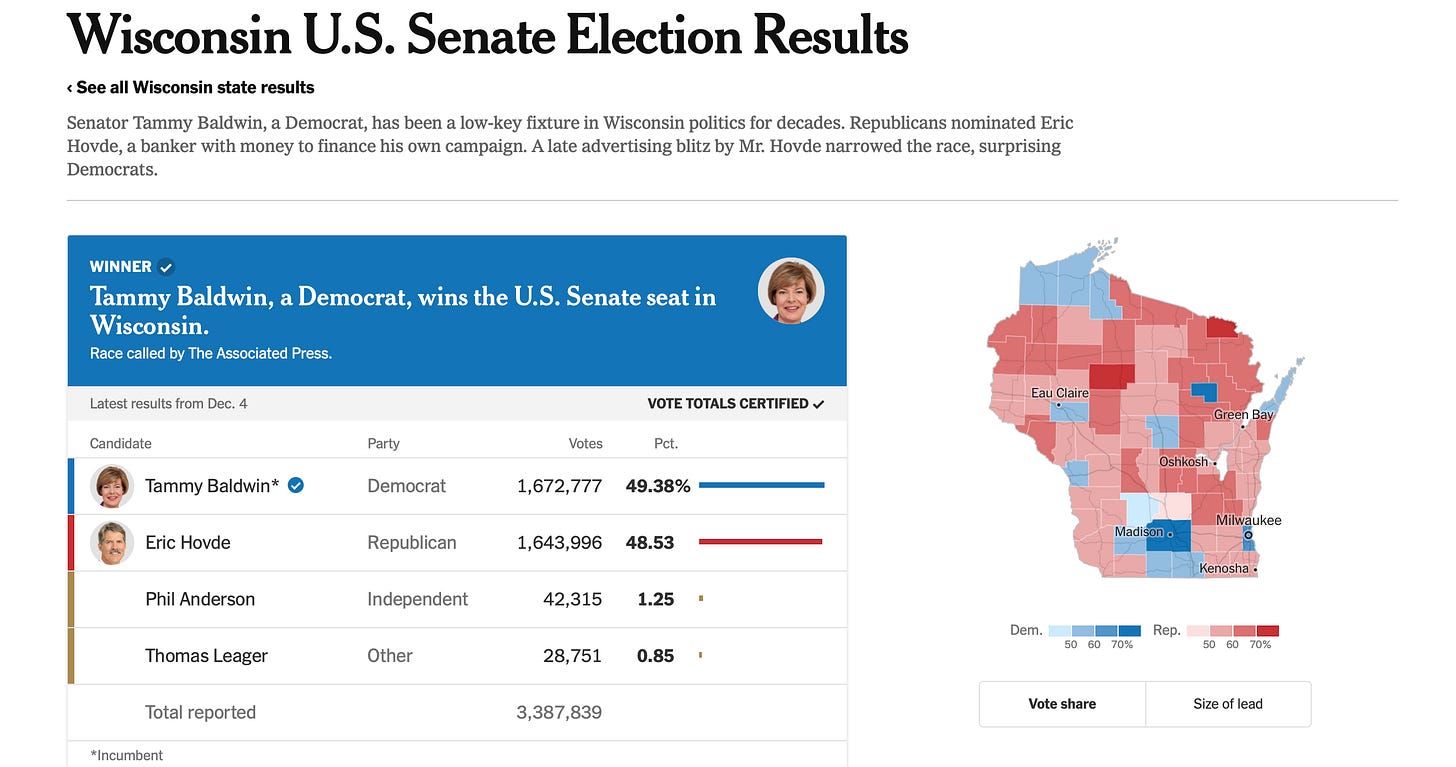
- In Wisconsin, Democrat Tammy Baldwin defeated Republican Eric Hovde by 29,100 votes, or 0.9 percentage points. A Libertarian drew 1.3 percent (42,300 votes) and a representative of the “America First Party” – considered a Democrat front by some observers – collected another 28,700 votes.
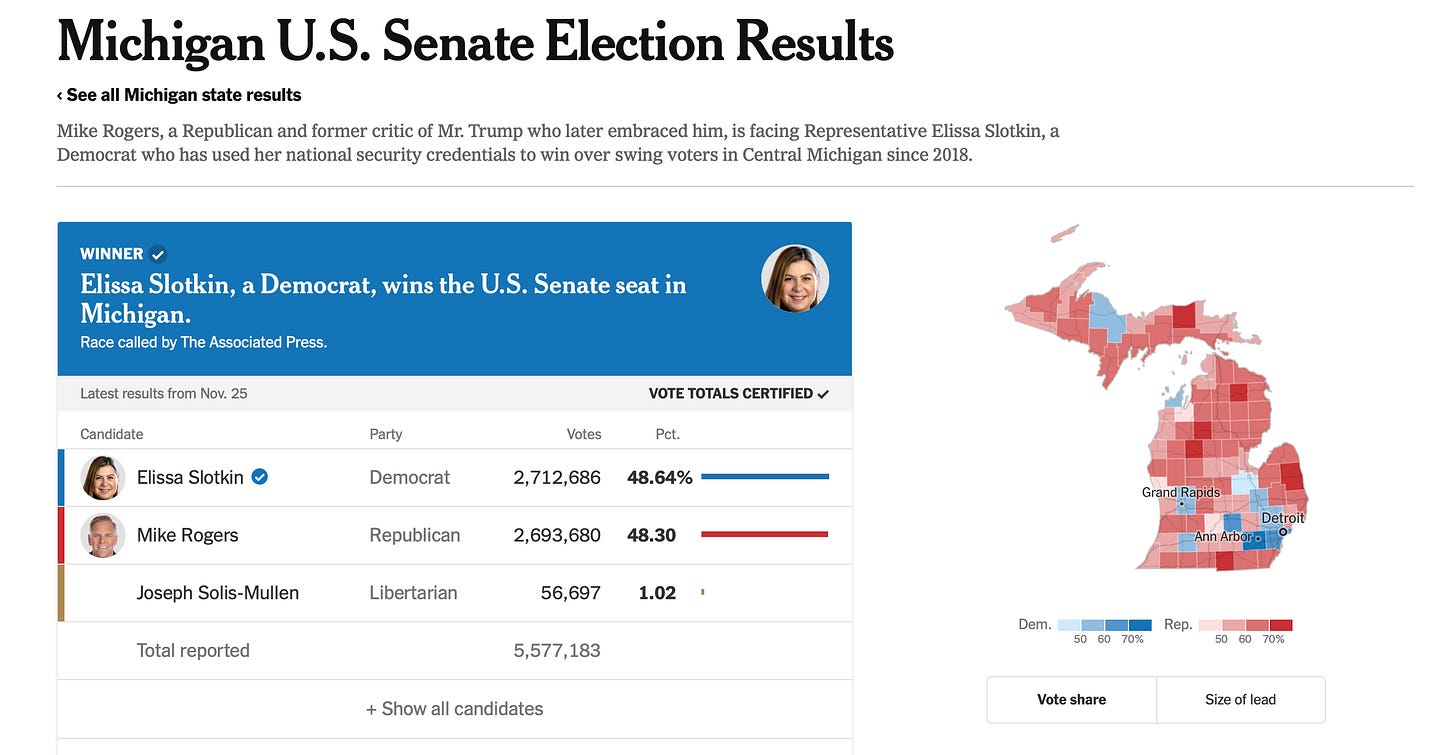
- In Michigan, Democrat Elissa Slotkin defeated Republican Mike Rogers by 20,200 votes, or 0.3 percentage points. A Libertarian and two other right-leaning candidates drew 2 percent (106,000 votes).
- In Nevada, Democrat Jacky Rosen defeated Republican Sam Brown by 24,000 votes, or 1.7 percentage points. A Libertarian and the conservative Independent American Party drew 2.9 percent (42,000 votes).


Getting to a majority usually requires a second round of voting called run offs.
Traditional runoff elections are supposed to solve the spoiler problem and deliver majority winners – but they’re costly, inefficient, and the most recent ones went no better for Republicans.
In 2020, Georgia Republican David Perdue defeated Jon Ossoff on election day by 78,000 votes and almost 2 percentage points. But because a Libertarian drew 115,000 votes, Perdue fell just a whisker shy of 50 percent. Then Ossoff came from behind and won the runoff six weeks later.
Why?
Massive voter drop off from Round One to Round Two.


Using Ranked Choice Voting, had those Libertarians indicated a second choice on election day, Perdue would have certainly earned the votes he needed.
Joe Biden would not have had a trifecta in Washington and very few of his judicial nominees would have been approved.
And we wouldn’t be talking about Ossoff as a likely presidential candidate in 2028.
I know that many fellow conservatives have been suspicious of ranked choice voting. Some worry that it helps Democrats.
It doesn’t.
President Trump won RCV electoral votes in Maine and Alaska in 2024, and a Libertarian spoiler likely cost him wins in Georgia and Arizona in 2020.
2020 Georgia Margin 11,779 vs 62,229 for Libertarian

2020 Arizona Margin 10,457 vs 51,465 for Libertarian

(Graphics above are Wikipedia)
In my home state of Virginia, Gov. Glenn Youngkin, Lt. Governor Winsome Sears, and Attorney General Jason Miyares won ranked choice primaries on the path to their general election victories in 2021.
No Republican had won in Virginia since 2009 and it was feared that Republicans were on their way to becoming a third party in a two-party system.
Instead, the GOP had a ranked choice primary – where candidates largely avoided attacking one another, united behind a majority winner, and then swept all three statewide offices.
Ranked choice voting doesn’t solve every problem. It should be recognized for what it is: a tool in the toolbox.
That’s a tool the GOP could use to strengthen itself heading into the 2028 presidential cycle.