A study released last week reported that half of all households with children in Virginia and 42 percent of all households are “food insecure.” Those numbers are notable not simply for their size, but for the yawning gap between those findings and federal statistics that had consistently placed the percentage of food insecure people in Virginia at around 13 percent.
The federal statistics were drawn from annual Household Food Security Reports, which were terminated in September 2025. In a press release, the United States Department of Agriculture called the reports “redundant, costly, politicized, and extraneous studies [that] do nothing more than fear monger.”
The debate over how many people in Virginia and across the nation are food insecure is taking on fresh urgency as new policies affecting the Supplemental Nutritional Assistance Program (SNAP), formerly known as food stamps, and Medicaid are creating a generational shift in the amount of federal support people can draw from.
Gov. Abigail Spanberger has said that some 300,000 Virginians could lose Medicaid under new requirements, and about 130,000 fewer Virginians now receive SNAP benefits.
The challenge of food insecurity predates recent policy changes, however, and Virginia’s food banks have been on the front lines witnessing the problem’s growing severity since COVID.
Dan Maher, president and CEO of the Fredericksburg Regional Food Bank, reports that “[w]e have had 48 percent growth (53,000 served in the most recent year vs. 36,000 served) since the end of the pandemic.”
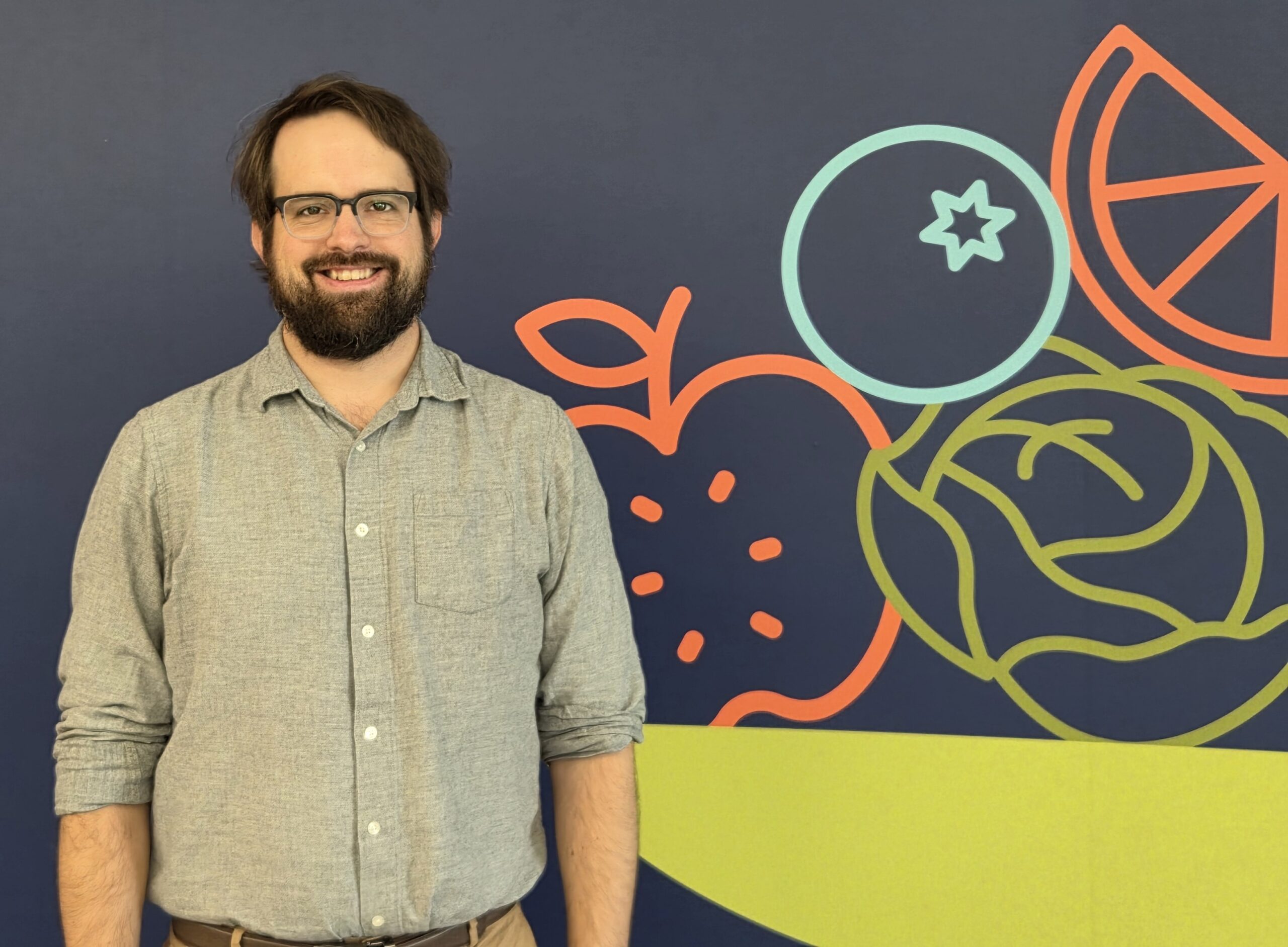
The Virginia Free Press on Monday sat down with Eddie Oliver, executive director of the Federation of Virginia Food Banks, to explore the gap between federal hunger data and that found in the recently released survey conducted by NORC at the University of Chicago, how lost health insurance further complicates the hunger issue, and ideas for how state lawmakers and individuals can address these challenges that have been growing since the pandemic.
This interview has been edited for length and clarity.
VFP: Until it was ended, the USDA had been reporting that roughly 13 percent of Virginians face some form of food insecurity. This new study reports significantly higher numbers – 26 percent of households experience “very low food security,” defined as people “facing disruptions in the amount of food they consume and the regularity of their eating patterns, while an additional 15 percent report “low food security,” defined as “reduced quality, variety, or desirability of diet.” That means 41 percent of Virginians face significant challenges feeding themselves and their families. How do you explain the difference in the data? Especially since both surveys are based on the same 18 questions asked of respondents.
Eddie Oliver: One possible factor is “social desirability bias.” The USDA survey is conducted by telephone and in-person, meaning you are having an in-person conversation. Our survey was conducted online.
Social desirability bias says you are less likely to admit to problems in conversations, but more likely to admit to them if you’re answering online.
Our study also pulls from a larger sample size – 5,600 respondents for the 2026 Virginia Hunger Survey versus 1,200 for the USDA survey.
Another key difference is that the Virginia Hunger Survey asked all participants the full set of 18 questions in the federal survey. By comparison, the federal survey used a two-question screener, and does not administer the full supplement to respondents who screen negative and report income above 185 percent of the federal poverty level.
VFP: Are there other indicators to suggest that the higher percentage of food insecure people the 2026 Virginia Hunger Survey reports is correct?
Oliver: Yes. The United Way has been measuring people who are Asset Limited, Income Constrained, Employed (ALICE) for several years. Their numbers are close to ours. The recently released data for 2024 shows that 38 percent of households in Virginia are struggling to cover basic necessities.
VFP: What are the reasons that people are struggling with food security?
Oliver: Higher grocery prices were causing major financial strain for the household. Among food insecure Virginians who responded to our survey, 87 percent said higher prices were causing strain. Grocery price inflation is up 33% overall since 2019.
No one is just hungry. If you have food security challenges, you likely have other challenges.
VFP: And this is occurring against a backdrop of declining enrollment in SNAP.
Oliver: Correct. Virginia has lost 14 percent (about 130,000 people) of SNAP recipients over the past year (July 2025 – August 2026). We have not gotten a clear answer from the state that explains the decline. Some of the fall off predates passage of HR1.
Typically SNAP enrollment numbers decline as the economy improves, but economic data would not suggest we should be seeing this large a drop off in SNAP participation.
People are subject to new work requirements and verification documentation on a rolling basis as they reach their recertification deadline, and that could account for some of the decline.
Another issue could be how people learn about federal changes. In Virginia we have locally controlled services. So every county and city is responsible for communicating policy changes. This could be causing confusion, misunderstanding.
Generally speaking, we hear anecdotally that vulnerable populations are afraid of being enrolled in federal programs in the current climate.
VFP: Food insecurity tells a broader story of how people are struggling. Can you tell us more about how?
Oliver: No one is just hungry. If you have food security challenges, you likely have other challenges. Housing, high medical bills, prescriptions, gas and utility payments. These are all showing up as causes of strain for Virginia households.
Food is essential to health. Our survey found food insecure people are more likely to suffer from one or two chronic health situations. So when folks lose access to healthcare, they are more likely to develop chronic health conditions, and if they are food insecure that adds to the problem.
Also, healthy food is more expensive, so food insecure people will trade healthy food for less-healthy options.
VFP: Why did you decide to undertake this survey?
Oliver: As a food bank network we want to know if we’re having an effect. We can measure pounds in pounds out, but we really want to know are people getting the food they need to have an active, healthy lifestyle. Because the USDA was ending its survey, we felt that we needed to do it.
VFP: Was there a model the NORC at the University of Chicago, who conducted the survey, used in putting the 2026 Virginia Hunger survey together?
Oliver: Yes. Our survey is based on the Capital Area Food Bank NORC Hunger Survey.
This survey has been conducted for seven years now in the greater Washington, D.C., area.
With the end of the USDA survey, we felt like we needed to move quickly. We had a survey design ready. We had partners at the Virginia Department of Social Services (VDSS), Virginia Tech, and No Kid Hungry Virginia. And we had the support of VDSS Commissioner Duke Storen, who has worked in food access for a long time and believes in the need to measure this.
Food is essential to health. Our survey found food insecure people are more likely to suffer from one or two chronic health situations. So when folks lose access to healthcare, they are more likely to develop chronic health conditions, and if they are food insecure that adds to the problem.
VFP: Do you believe that people are becoming more aware of the problem of hunger in the United States? And why do you think it is hard to move the needle on this issue at a policy level?
Oliver: It is an increasingly salient issue because of how widespread the challenges of the cost of living are getting. People can relate to the trade-offs people have to make. If you don’t pay for medicine you get sick. If you don’t pay for your car you lose it. Food is the thing that is most quickly sacrificed.
Everyone shops at the grocery store, and so everyone knows what it is like. There is a shock value to that.
Child food insecurity in particular resonates with folks. Anyone who has been a parent worries about what kids are eating, and understands how much that sets them up for the future.
So on one level this is a relatable issue.
On another level, there is a culture of individualism in our society that says, if you don’t have money you should do something about it. But people are beginning to appreciate that there are systemic issues that are keeping people from reaching food security.
VFP: What, in your estimation, should we do from a policy level to address this challenge?
Oliver: We have to protect the safety net. For every meal food banks provide, SNAP provides nine.
In particular, we are hoping the state will help support what is being lost at the federal level.
If we can close the SNAP eligibility gap, that will go a long way toward closing the gaps that we are seeing. So we need to give families confidence they can apply for these programs in a safe, easy way. That requires outreach, education, and the state ensuring we are operating these programs as seamlessly as possible from the user perspective.
An example of what we might be able to do: There is a lot of eligibility crossover between SNAP and Medicaid. The state could be sharing data between the agencies to identify people who are receiving one of these benefits, but would probably be eligible for the other.
I serve on the Virginia Commission to End Hunger. We are in the process of identifying policy recommendations. Some of the things we are considering are increasing the minimum SNAP benefit for seniors. Some 38 percent of eligible seniors participate in SNAP, but many only get the minimum benefit of $23 a month. New Jersey and Maryland have supplemented that amount to make it more attractive.
Another program worth looking at is farms to food banks. The state is investing $4 million this year for food banks to get more food from growers. We would like to see that investment grow.
Child food insecurity in particular resonates with folks. Anyone who has been a parent worries about what kids are eating, and understands how much that sets them up for the future.
VFP: What about from the individual level? These problems can feel overwhelming. What can people do to make an impact? Volunteer at or make financial contributions to their local food bank? Pay more attention to their neighbors and offer to help? Get involved politically?
Oliver: All of those.
Hunger is a solvable problem. We have enough food for everybody. The challenge is making it accessible. It’s not like housing where you can suddenly build 10,000 units. Supply is not the problem in food security.
Volunteering, donating financially if you can is important. Because of our buying power, $1 given to the food bank goes much further than a $1 at the grocery store.
We need folks to be asking representatives what is their plan to alleviate hunger in Virginia, and what are you going to do about it?
At the end of the day, Hunger is a bipartisan issue. We work closely with Republicans and Democrats, because everyone agrees no one should go to bed hungry in this country. There are only differing opinions about how to solve it. But there is plenty of common ground for us to work on together.