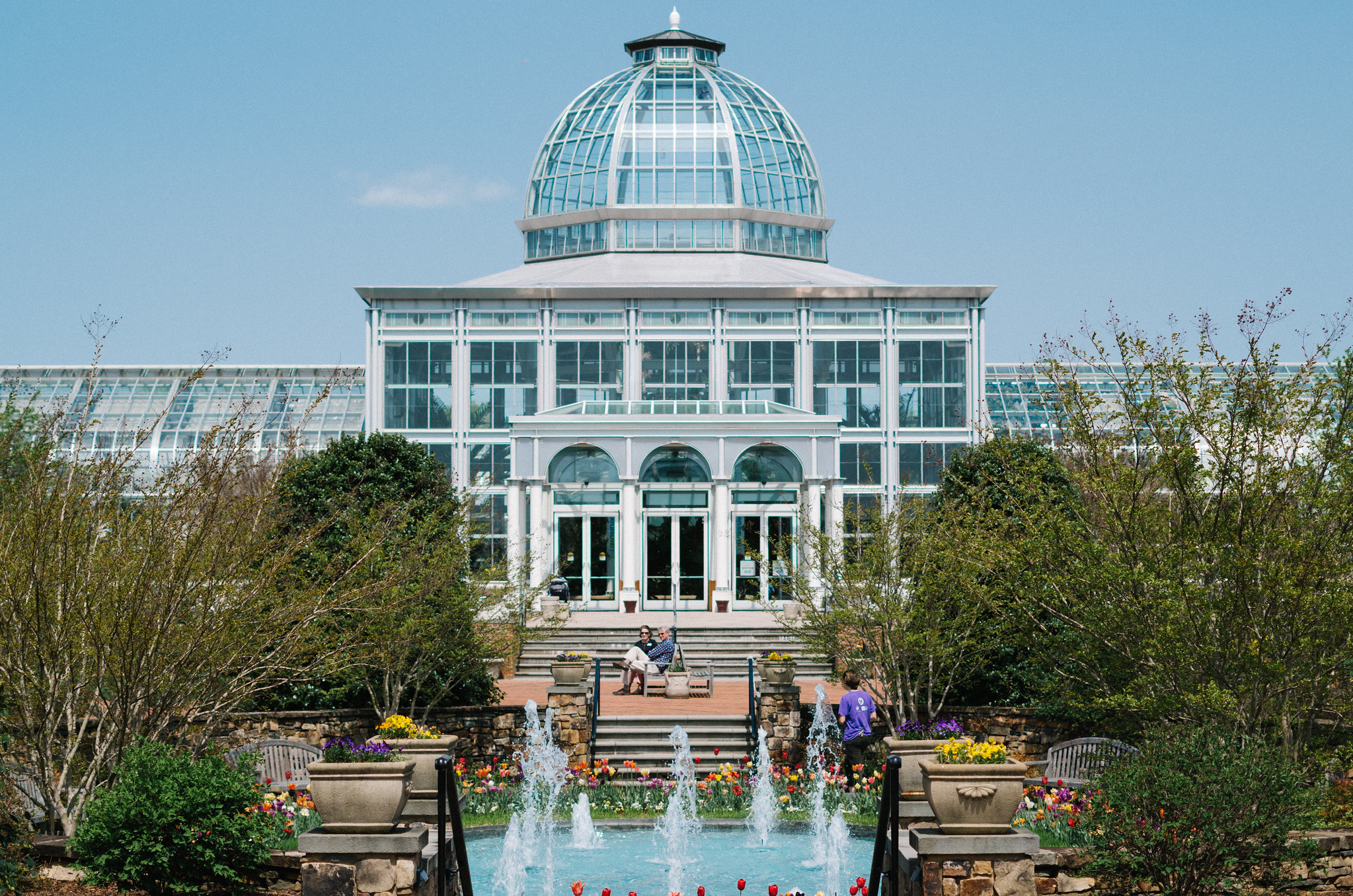
Outside the Lewis Ginter Botanical Gardens this Labor Day, striking workers are holding the line on their demand for a two-dollar per hour pay increase. Currently, unionized workers average $17.50 per hour – not enough, organizers say, following two years without a pay raise.
According to the Labor Action Tracker maintained by Cornell University and the University of Illinois, it’s one of about 10 labor actions in Virginia this year. Most of those actions were resolved in 24 hours.
The small number of strikes and strikers, however, is not the best measure of where the labor movement stands.
Over the past 40 years, nationwide “labor density” – the percentage of wage and salary workers in a union – has fallen from just over 20% in 1985 to about 10% in 2025, according to an analysis by the Brookings Institute. But the number of union members grew by more than 400,000 individuals over 2024.
In Virginia, the growth trend is more clear. According to Bureau of Labor Statistics release union members in the commonwealth as a percentage of the employed has risen every year since 2022 and today stands at 5.4 percent.
What is driving the growth? Money certainly is part of the equation.
The just-released State of the Unions 2026 report reports that in Virginia, union membership brings with it a 6.1 percent wage premium. That’s below the national average of 8.4 percent, but on par with neighboring West Virginia (also 6.1 percent) and well above North Carolina (3.5 percent).
However, it’s not necessarily the most-important reason. The Littler 2025 Labor Survey Report found that work/life balance, a desire for input in decisionmaking, and job security were the most important factors outside of pay that people engaged in union activities cite.
More pronounced than union growth is public support for unions.
Gallup released a poll on September 1 that showed 47 percent of Americans want unions to have more influence than they do today, “a record high in the past quarter century and roughly double the 23% who want unions to have less influence.”
More interesting is the finding that 71 percent of Americans approve of labor unions. That’s 15 percentage points higher than in 2016, when 56 percent expressed a positive attitude toward labor unions.
Politicians, Business Leaders Wrestling with Changing Labor Landscape
Gov. Abigail Spanberger’s historic election in 2025 came with the firm support of Virginia’s labor unions. Earlier this year when she vetoed a bill that would have allowed for public sector collective bargaining, she drew the ire of some of Virginia’s most powerful labor leaders.
The Virginia AFL-CIO issued a statement saying “This veto is a devastating betrayal to the hundreds of thousands of public employees who have spent years, and in many cases decades, fighting for a seat at the table. Teachers. Firefighters. Home care workers. State employees. Public servants who are the pillars of our communities and who keep Virginia running through crisis after crisis, only to be told yet again that their voices do not matter.” It continued, saying that “Virginia’s labor movement will not forget this moment.”
Leaders of the SEIU and the Virginia Education Association also condemned the action.
Spanberger countered that she vetoed the bill in part due to concerns raised by smaller localities to the costs of collective bargaining. These localities’ “concerns were significant,” she said. “People can react to their anger or their disappointment in me as they choose, but I’m going to do what I think is right.”
While Democrats in Virginia are struggling to retain a traditional ally, some labor groups are aligning themselves more closely with business.
The surge in data center construction and industry in Virginia is benefiting groups like the Independent Brotherhood of Electrical Workers.
Writing recently the New York Times, Don Slaiman discussed how much IBEW Local 26 workers have benefited from the data center industry.
“Data centers are the best opportunity in generations for blue-collar workers to attain a portion of the American dream,” he wrote, noting that hours work by members of IBEW Local 26 has jumped from 14 million hours annually in 2016 to 28 million hours in 2025. And projections are that number will grow again to 33 million by the time 2026 ends.
He’s clear about what is driving this. “That job growth happened because data centers came to Northern Virginia and our members went to work constructing and maintaining them.”
These types of issues reflect the unsettling of longstanding political and business alliances – a Democratic governor alienating labor, a labor leader celebrating the opportunities created by the data center industry.
How this will affect the midterm elections remains to be seen. But there is little doubt that it will have a part to play.
Politico on Sunday reported that the national party is going to put data centers in the crosshairs during the midterms. “Democrats want voters to see data centers as giant outposts of megacorporations that enjoy undue tax breaks and ill-begotten monstrosities that suck up precious water and hog electricity.”
That strategy in Virginia has the potential to both attract, and alienate union support.
Businesses, on the other hand, may be underestimating the possibility of labor gaining a foothold in their organizations may be misreading the tea leaves, according to the Littler Report.
“The majority of employers surveyed that do not have any unionized employees (85%),” it found, “believe that if a union organizing drive were held today, less than 30% of their employee base would sign a union authorization card.”
The problem is that “data from other surveys suggest these respondents may be underestimating the willingness of their employees to at least consider joining a union.”
An Unpredictable Future
The workers walking the line outside of Ginter Botanical Gardens likely aren’t raising eyebrows far beyond those who frequent the gardens. The two sides reportedly aren’t that far apart in their negotiations.
“I would be willing,” union negotiating member Jamie O’Brien told WTVR, “to find a compromise with the garden between that 3% and that two dollars if it is in good faith, if it is reasonable and provides us with a semblance of security at this place.”
In a Virginia where union membership is growing, however, while concerns about affordability remain high and the opportunity that data centers are creating for labor to see their lives elevated, the future is proving hard to predict.
Editorial Assistant Leena Sabo contributed to this report.