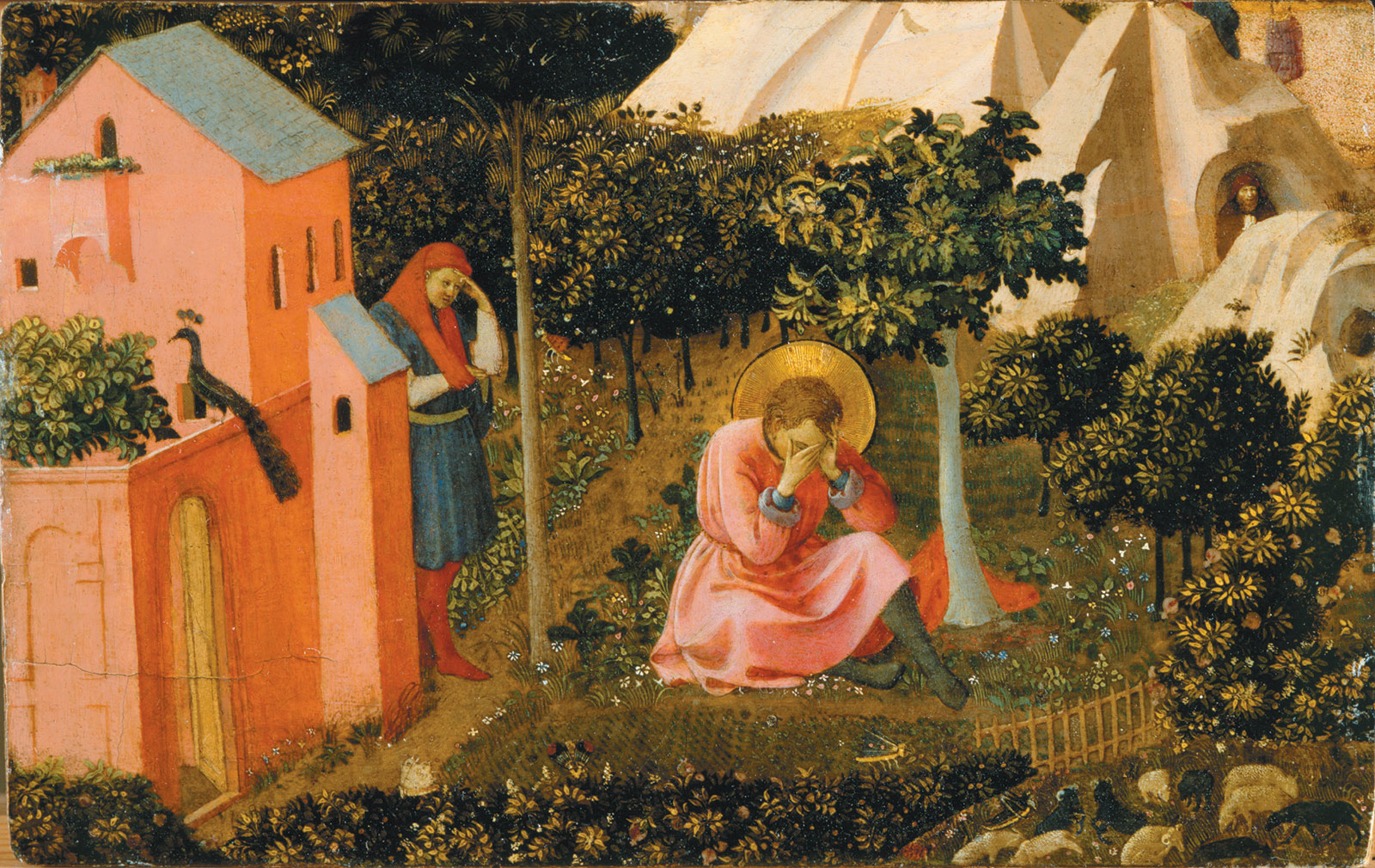
No other institution protects a nation’s liberties like a free and open public square. Thomas Jefferson reminds us that if a people desires to be both ignorant and free while remaining civilized, such a people expect what never was and never will be. Today, we live in deeply illiterate times where print journalism is at its lowest ebb in the history of the republic, trust in the institution is at an all-time low, and reading — the pastime of a free people — is swiftly becoming the province of a self-exiled elite. Only 4% of all Americans read more than 50 books a year, just one book a week. If one does not read literature, then one becomes illiterate, and there is but one cure: tolle lege. We must take up and read.
As Aristotle noted, words carry profound meaning; similarly, Jean-Paul Sartre observed that genuine reading relies on a pact of generosity, requiring both the writer’s latitude and ability to convey an idea against the backdrop of a reader’s freedom and capacity to interpret such work.
Yet describing and safeguarding this public square remains somewhat obtuse, as if we were describing the necessity of a phantom limb.
Many today long for a journalistic Shangri-la of non-partisanship, reminiscing about the days when Walter Cronkite provided a trusted voice to explain the world. Unfortunately, for a large portion of the public, Cronkite is no longer a memory, but merely a name from history.
This present condition can perhaps be traced back to the turbulent convention debates between Gore Vidal and William F. Buckley, Jr., an exchange which laid bare not just a deep and visceral hatred between the two men, but a tidal wave of cheap imitators.
Today, those debates are remembered less for their intellectual substance than for the dramatic if penultimate exchange during the 1968 Chicago riots at the Democratic National Convention, where exhausted by Vidal’s expert verbal knifework, Buckley responded in kind with a vitriol of his own which Buckley regretted and in which Vidal deliciously reveled.
Vidal mined Buckley’s gaffe for all it was worth. Conversely, Buckley never quite forgave himself for a flash of malice against an opponent he regarded as small, contemptible, and whose reputation rested somewhere between iconoclast and sybarite. Yet while Vidal is rarely mentioned today—and usually only in the shadow of his betters—the exchange between him and Buckley introduced a corrosive framework where the public preferred the gladiatorial school of entertainment over being informed.
The Virginia Free Press is by no means set upon a course to correct the times, but in our own small way it is set against them.
If the words of Alexsandr Solzhenitsyn ring true, our duty to truth is to reject the lie, not diagnose and then dismiss the other. The challenge of journalism — as it is in life — is to explore and distill these experiences, compare notes, and help arrive at a better sense of the thing we are considering so that the public can arrive at their own opinions in a free and open public square.
Certainly there are opinions in the world, but the connotation that because someone is wrong that they are therefore evil is preposterous. To borrow a Shakespearean reference as Henry VI contended with his own version of the Buckley-Vidal debates:
“O, what a scandal is it to our crown
That two such noble peers as you should jar!
Believe me, lords, my tender years can tell
Civil dissension is a viperous worm
That gnaws the bowels of the Commonwealth.”— William Shakespeare, “Henry VI” Part I, Act 3, Scene 1 (1591)
One might wager that this worm has gnawed at the bowels of our Commonwealth for far too long.
Conservatives have long complained that the institutions — journalism among them — have locked out precisely half of the American public. Building parallel institutions may insulate, but it certainly does not bring the two halves of the conversation together, as Cass Sunstein has long pointed out.
One person wakes up reading the Washington Post and listening to MSNBC, the next wakes up reading the Wall Street Journal and listening to FOX News. When the two individuals meet, they may speak the same language and even live in the same neighborhood, but they arrive with two different sets of facts, experiences, hopes, fears, biases, and prejudices. How then do we reconcile the two?
The solution of non-partisan journalism has been tried and has failed, precisely because non-partisanship nearly always enforces a status quo. The fig leaf of token inclusion is insufficient to the task. Only through a multipartisan approach which offers the insights of as many practical viewpoints as possible can offer the possibility of piercing the veil of misunderstanding.
There is hope that there are enough people of good will across the political spectrum who still seek to understand rather than scorch the earth and rule the ruins. Who are willing to bring a bit more of themselves to the public discussion about what we value and why.
Winston Churchill reminds us that good journalism has no duty to be neutral between the fire and the firefighter, yet every disagreement should be the beginning of a conversation — not its terminus.
Insofar as there are individuals willing to work for the common good in an open and free public square, there is a radical bet being placed on that sentiment here at the Virginia Free Press. We hope you meet that enthusiasm with a similar spirit so that the old ways yield to new ones, and that the embers of the Virginia Way may still light the fires for future generations of Virginians to come.