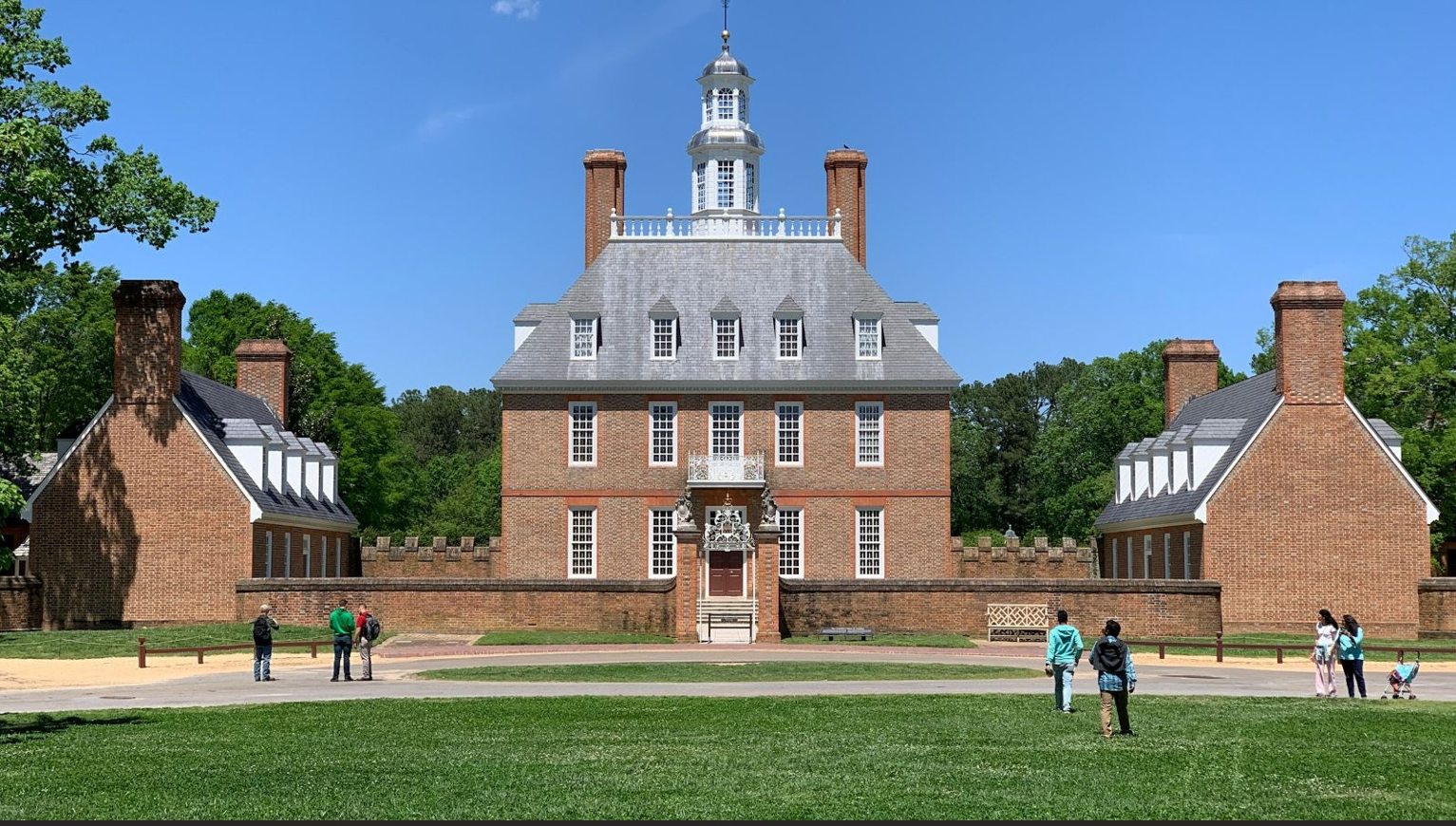
The world that Thomas Jefferson knew is far removed from that we inhabit today. One need look no further than parking lots to understand how distant we are from that time.
Visitors pulling a car into the public lot at the intersection of Prince George Street and North Henry Street in downtown Williamsburg, near one of two Jefferson statues, will need – at minimum – a credit card to book time in the lot. Ideally, one will also have a cell phone for scanning a QR code that allows one to quickly pay for time.
It’s quick, convenient, and a vast improvement over what would have been required of Jefferson to care for his horse while attending school at William & Mary.
It also depends on a robust economy that Jefferson could not have imagined.
The simple act of parking a car in Williamsburg today depends on a banking system that makes credit cards and banking cards readily available to the vast majority of the citizenry. It depends on the cell towers and Wi-Fi connections that make mobile device transactions possible. It requires data centers to route that information from phone, to payment processor, back to the consumer, and to those responsible for ticketing drivers who fail to pay for their time.
Beyond the technical wizardry, none of this exists without an accumulated, widely shared knowledge that depends on near-universal literacy for its transmission. This is what Jefferson had in mind when he wrote about the importance of nurturing and expanding light and education, even if he could not have imagined the particular mundane task of parking a car.
That is the quiet argument of the parking lot: shared knowledge builds things no one of us could build alone.
And shared knowledge is precisely what is now coming apart.
Living Refracted Lives
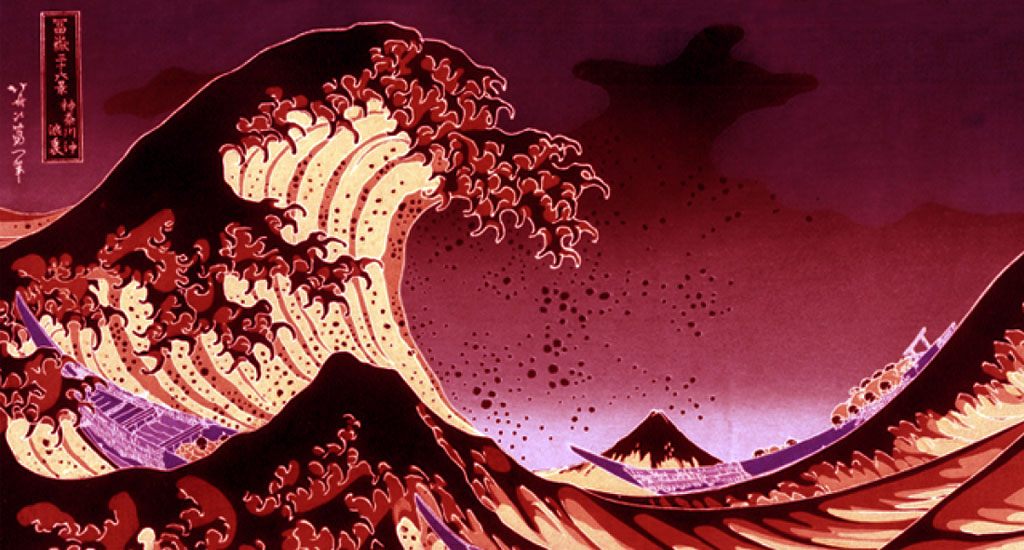
Light and education are still with us, but that light is not diffused. Rather, over the past 20 years, the light and education we depend upon have become refracted.
Consequently, rather than confronting a problem in full daylight, which forces us to reckon with the whole of it, we bend toward the color that most flatters what we already believe.
The results are the information silos that have come to define life as experienced in social media, in our shrinking interactions with people unlike ourselves, and in the news and information we consume.
The Virginia Free Press (VFP), which launches today, is committed to journalism that covers the full spectrum of serious ideas on the topics we write about – technology and economic development, education, and politics.
Each of these has seen debate in the public square unravel in recent decades, as ideology has become more important than facts, and speaking loudly has become more influential than listening and reasoning.
To restore the public square, citizens require accurate, factual, reasoned information that spurs thoughtful discussion and moves us all toward workable solutions to the challenges before us.
To deliver this, the VFP places a premium on writers who can see the stories they cover in the full light of day, as opposed to a narrow band.
Restoring the Public Square
Cherry-picking facts is an age-old game that modern politics has taken to absurd heights in recent decades.
Restoring the public square requires journalists and readers to look beyond the base facts that opposing sides use when facing off against one-another in a battle of words that comes to resemble a verbal Maginot Line.
We would rather bring readers into the real complexity of the problems we face, and into the strongest, most fully developed version of each view of them. We invite readers to explore the news that drives our public debates in the full light of day.
The Virginia Free Press publishes daily and covers the Commonwealth. It is edited by Martin Davis, with reporting, analysis, and opinion writings produced by a team of writers who reflect Virginia’s intellectual diversity. And corrections, when necessary, will run at the top of the page, not the bottom.
Yes, we live in a society today that is far, far removed from Jefferson’s. But the need for diffused light and education that sound journalism can deliver has never been more urgent.
Welcome to the Virginia Free Press.
MARTIN A. DAVIS, JR. is the editor in chief for the Virginia Free Press.