The problem with debates is that no one is actually interested in a free exchange of ideas anymore, least of all the organizers of aforementioned debates.
There — I said it out loud.
Brandon Jarvis over at the Virginia Political Newsletter has a very good write up over the present kerfuffle in VA-06 over rival debate schedules between Rep. Ben Cline (R-VA) and Democrat nominee Beth Macy. Controversy over debates is not limited to VA-06, as other debate formats are insisting on certain rules and excluding participants without involving all parties — the University of Mary Washington among them.
Yet for the real meat of the conversation, look no further than Dwayne Yancey over at Cardinal News for his excellent take on what debates are and whether they even matter anymore:
As a journalist, I must confess that debates usually don’t do much to really probe candidates on key issues. Candidates are too good at reciting their sound bites and avoiding the question. My idea of a perfect debate format would be a variation of the old game “20 questions.” I’d pick 20 questions and stage 20 events, where the candidates would have to spend the whole time digging into the details. I don’t get to make the rules, though, and no candidate would ever agree to such a thing. Instead we have the pale imitation that we’ve come to see in most televised campaign debates: Somebody asks a question, the candidate has a short time to answer (reciting their rehearsed lines), then the other candidate does the same.
In Virginia Senate District 10 there were a grand total of seven candidates running for the seat left emptied by now-Rep. John McGuire (R-VA). The debate in Cumberland County could have been a complicated affair with so many candidates (and all of them qualified). Grandstanding is a question, candidates talking over one another was another, and the possibility of “gotcha” questions is always a concern of candidates who know instinctively that one can only lose a debate and rarely win one.
As the moderator for the debate, my grand solution — one that was graciously accepted by the organizers — was to send the questions ahead of time to all the candidates where they could formulate quick 2-3 minute responses to each. Did it yield the debate to talking points? Perhaps, but it prevented three problems.
First and foremost, the candidates got to say precisely what they wanted to say with concision. Sometimes they strayed, but all of them clearly appreciated the ability to get a thought out on their own terms (and so did the audience).
Second and very close to the first, it prevented the “gotcha” element that most debates have devolved into. No one was surprised by the format, no one was surprised by the questions, no one could attack their opponents. It was a clear contrast without the vinegar of vitriol — and it worked.
Third and thankfully, the audience themselves felt like they could actually get to know their candidates. Going into the debate where the outcome would be settled by convention, the GOP faithful was able to get a sense of all of the men and women in front of them with notable exception (former State Senator Amanda Chase was unfortunately unable to attend). I doubt anyone really knew Luther Cifers before the debate, but leaving it, even if one might not have been sold on Cifers as a first pick, plenty were sold on Cifers as a second or third pick and a good man (which is how you win any convention).
Now this didn’t stop me from giving them a pop question — what book are you reading right now? Some gave anodyne answers such as the Holy Bible, which is fine, but not terribly insightful. Others gave great answers. Yet the objective of any debate should be the good ol’ fashioned Aristotelian argument to understand rather than the Nietzschean arguing to win. The latter is all about power, the former is about reasoning, and we could stand a good deal more of the former in a world that seems quick to reward the latter.
Yancey chimes in further with a salient point, namely that those of us who actually pay attention to politics are a weird, insular bunch in a sea of normal humans who are doing the working, living, and dying in this town:
Candidates can debate in person 20 times, 200 times, but if the only people who hear it are in the room, that doesn’t really accomplish very much in terms of educating voters in a congressional district with 547,564 registered voters. Only something where people can actually see the event can accomplish that.
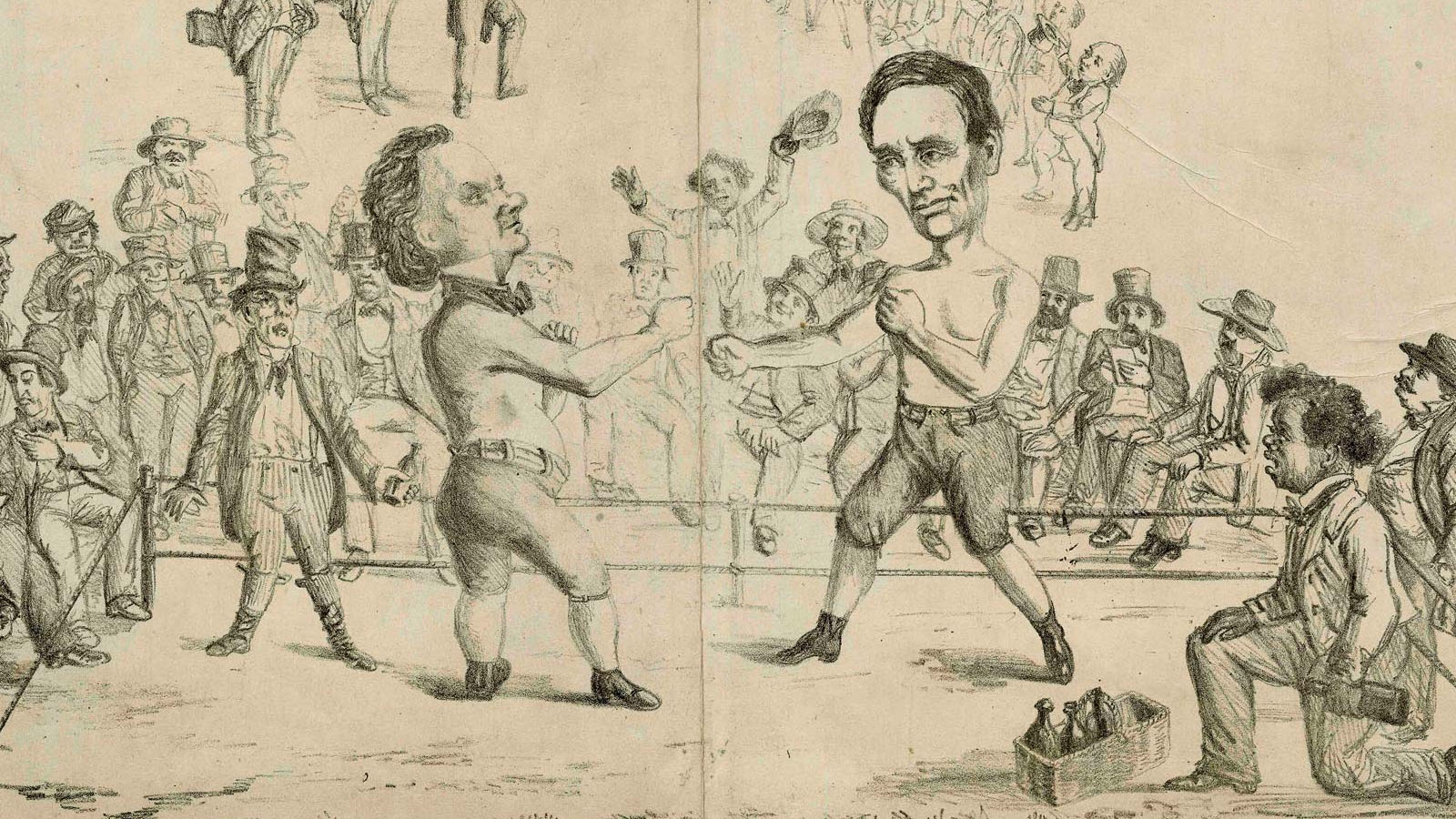
One value of the Lincoln-Douglas debates is that lots of people saw them. Their smallest crowd, in Jonesboro, Illinois, drew 1,500 spectators, still staggering by today’s standards. Anywhere from 16,000 to 20,000 people saw their encounter in Galesburg, Illinois. In all, maybe 70,000 people witnessed one of the debates. If all those were registered voters (and they probably weren’t), then 20.6% of Illinois voters saw Lincoln and Douglas debate the issues of the day. To achieve that same percentage today, we’d need the Cline-Macy debates to be viewed by 112,798 people. Can any debate today achieve that kind of scale if it’s not broadcast?
Good point, indeed.
Would that every election came with the expectation of 20+ Lincoln-Douglas debates where citizens — not the agitators and hecklers and handful that make politics insufferable — came to hear a handful of candidates who might actually like one another yet profoundly disagree actually sit and reason with one another about the issues that matter.
Of course, this is so idealized as to be moderately absurd. Can we think of a time where two candidates who genuinely liked one another stood up and held a series of debates across their district or state and genuinely contrasted the pros and cons without resorting to polemics? Thomas Jefferson and John Adams were friends and ran what is still the most divisive and absurd presidential campaign in American history in 1796 and 1800 respectively.
Perhaps we are all grasping for a libertopia that doesn’t exist. Politics isn’t the School of Athens, and it sure as hell ain’t beanbag. But does it have to be Willie Stark meets The Manchurian Candidate all the time? Sure — no one likes scripted candidates or scripted lines, but so long as “gotcha” works and the media plays along, then are we really blaming the candidates when we should by rights blame ourselves? When we replace substance with theater, what precisely are we expecting (or lamenting) in the drift from the informative to the entertaining?
Tough questions. Yet so long as we tolerate adolescence as conversation, then we get what we deserve from candidates more than happy to pay us in our own coin.