For the 122nd time in our history, the winners of the American League and the National League will square off in the World Series beginning tonight. The timing couldn’t be better.
Longtime Washington Post sports columnist Tom Boswell, who wrote Why Time Begins on Opening Day, said that baseball’s interminably long season is special not because it demands we watch the game every day, but because on the days we need the game, it’s there.
As a people, we need these games, at this moment, for as long as they last — if we’re lucky, that will be seven games.
There are no two better teams for the moment.
In a Time
In a time when greed and corruption defines our culture and politics like at no time in our history, the teams with the sixth and 12th lowest payrolls will compete for their first World Series trophy.
The Milwaukee Brewers of the National League (12th lowest payroll) beat the team with the second-highest payroll in the game, the Los Angeles Dodgers, for the right to face the Tampa Bay Rays of the American League (sixth lowest payroll), who won a division that included three of the 10 highest paid teams in all of baseball — the New York Yankees (3rd), Toronto Blue Jays (5th), and Boston Red Sox (10th).
In keeping with the underdog theme, the Cleveland Guardians (lowest payroll) and the Chicago White Sox (fifth lowest payroll) made deep playoff runs this October.
And to further prove that wealth doesn’t guarantee success or prove competence, the team with the highest payroll in baseball — the New York Mets — finished dead last in the National League East this year, losing 88 games along the way. Fifteen games less than the bargain-basement Brewers who won 103 games in the regular season, and so far is 7 and 1 in the postseason and preparing to have the eyes of the baseball world on them tonight.
In a time when egocentric so-called influencers and narcissistic attention-seeking keyboard warriors live out their lives on social media platforms whose algorithms are designed to silo people and drive us apart, and shallow politicians scream for attention with ever-increasing inhumane insults, Pat Murphy and Kevin Cash, the managers of the Brewers and Rays respectively, are best known for putting their players above themselves and defending them relentlessly.
Murphy is fiery with a penchant for salty language, but he has close relationships with his players while holding them to the highest standards. He’s a fan of “gamers” — gritty players who make the most of the skills they have — over “superstars” whose natural ability can mask weaknesses and be difficult to motivate and teach.
Cash is quiet, data driven, almost boring. But like Murphy, he has close relationships with his players and will go to the wall for them.
In a time when Americans can’t talk because there is no shared cultural reference point, no shared story, in Milwaukee and Tampa communities are finding a shared story that bridges divides.
Milwaukee has “Win Our Way” posters and building wraps physically taking over downtown. Watch parties are bringing tens of thousands of fans together for games. And local businesses are displaying their civic pride by buying in to the excitement. Cranberry growers, for example, made a massive baseball glove with their crop. It’s kitschy, silly, and the type of thing that gives people reason to connect over something that binds them, not separates them.
In Tampa, even Hurricane Milton, which tore the roof off “The Trop,” the Rays’ maligned home field (soon to be replaced), hasn’t stopped the community from coming together to support one another and the team.
Suspend Disbelief
We have become a cynical people, anticipating the worst in everyone before allowing ourselves to see the good.
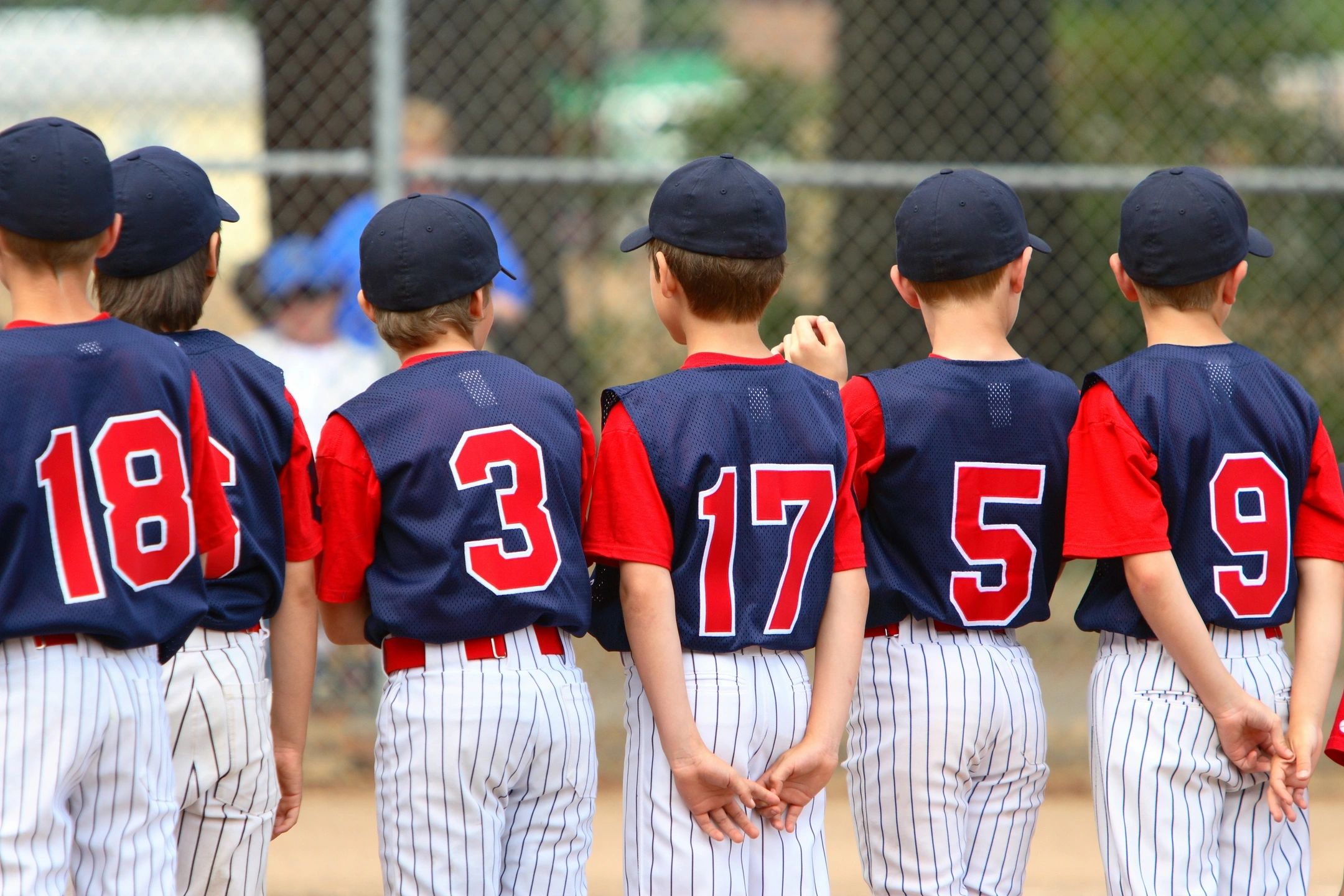
For the next week and a half, the World Series gives us an opportunity to suspend our cynicism, our disbelief in people’s motivations, and recover a sense of shared trust that what we are seeing on the field is real. Two teams, over as many as seven games, doing their level best to win a game that kids play on overgroomed fields and ragged backlots, on hardtops and in school yards
For a week and a half, we get to watch as 52 players at the top of their games square off and do amazing things, in an environment where the difference between winning and losing often hinges on a bounce of the ball, a flash of leather, or the bang-bang race to the bag between ball and baserunner.
Controversies will emerge. But rather than pulling people apart, they will become the fodder for kitchen conversations that fathers and mothers will pass down to their sons and daughters. Topics that friends will debate 40 years on in bars and barbeques.
Our history and culture are littered with them.
Did the Babe really call his shot in Chicago during the 1932 World Series? Why was Bill Buckner left at first in the 1986 World Series? What if Willie McCovey’s line drive in the 1962 World Series wasn’t grabbed by Bobby Richardson? These events mark our time, and the build a shared American story.
Push Back the Sun
Baseball is not a perfect game. Baseball players are not perfect people. Baseball fans are not all romantics and good-natured. And behind every feel-good story there are wrecked careers, season-ending injuries, and tales of lives wasted.
Rather like America itself.
What keeps the game together and going are the ideals that drive the game — sacrifice, teamwork, hard work, and a single-minded focus on a collective goal.
Rather like America itself.
October is when the game’s faults and ideals are most prominently on display.
Few things capture this tension better than the movie For Love of the Game, about an aging pitcher whose personal life is collapsing, his career is ending, and yet on the last day of a lousy season in a meaningless game, he finds himself chasing a pinnacle moment in his career.
Calling the game in the film is the Dodger’s legendary announcer Vin Scully. In the ninth inning, three outs from a perfect game, his arm aching and his control gone, Scully asks if Billy Chapel, played by Kevin Costner, can use his weakening arm “to push the sun back up in the sky and give us one more day of summer.”
Now more than ever, America needs this series. To push the sun back up in the sky and remind us that behind the struggle, the conflict, the pain, there is something greater. Something that unites us as Americans.
And that oftentimes, we see it best when things are at their worst.
Starting tonight, the Brewers and the Rays will try and do just that.
Game on.