
The challenge in reporting is to find the story within the noise. That can be challenging when a steady drumbeat of news stories suggests there is only one narrative.
Data centers and artificial intelligence are a topic that everyone seems to agree upon. The narrative? They must be stopped.
As we roll into November, that narrative is ringing loud and clear. Politicians are running on anti-data-center platforms. Counties that had welcomed data centers with open arms are now slamming the door shut. And poll after poll suggests that nearly everyone agrees that things have gone too far.
As they do so, manifestos painting overly optimistic visions of AI-driven futures or Dystopian visions of destruction continue to stir the pot and drive public agitation.
The problem with this narrative is that it abounds with contradictions.
Voters don’t want data centers, but they want all the services that they make possible. They worry about privacy, but for more than a decade have willingly turned over personal health information by wearing smart devices that measure heart beat and respiration and a host of other vitals. They don’t want Flock cameras spying on them, but think nothing of installing Ring cameras to capture every movement around their home.
These contradictions suggest that there is a more profound storyline than the public outrage that daily dot our news sources. But if the story isn’t public agitation over technology, or concerns about the environment, or even doubts about tech economics, what is it?
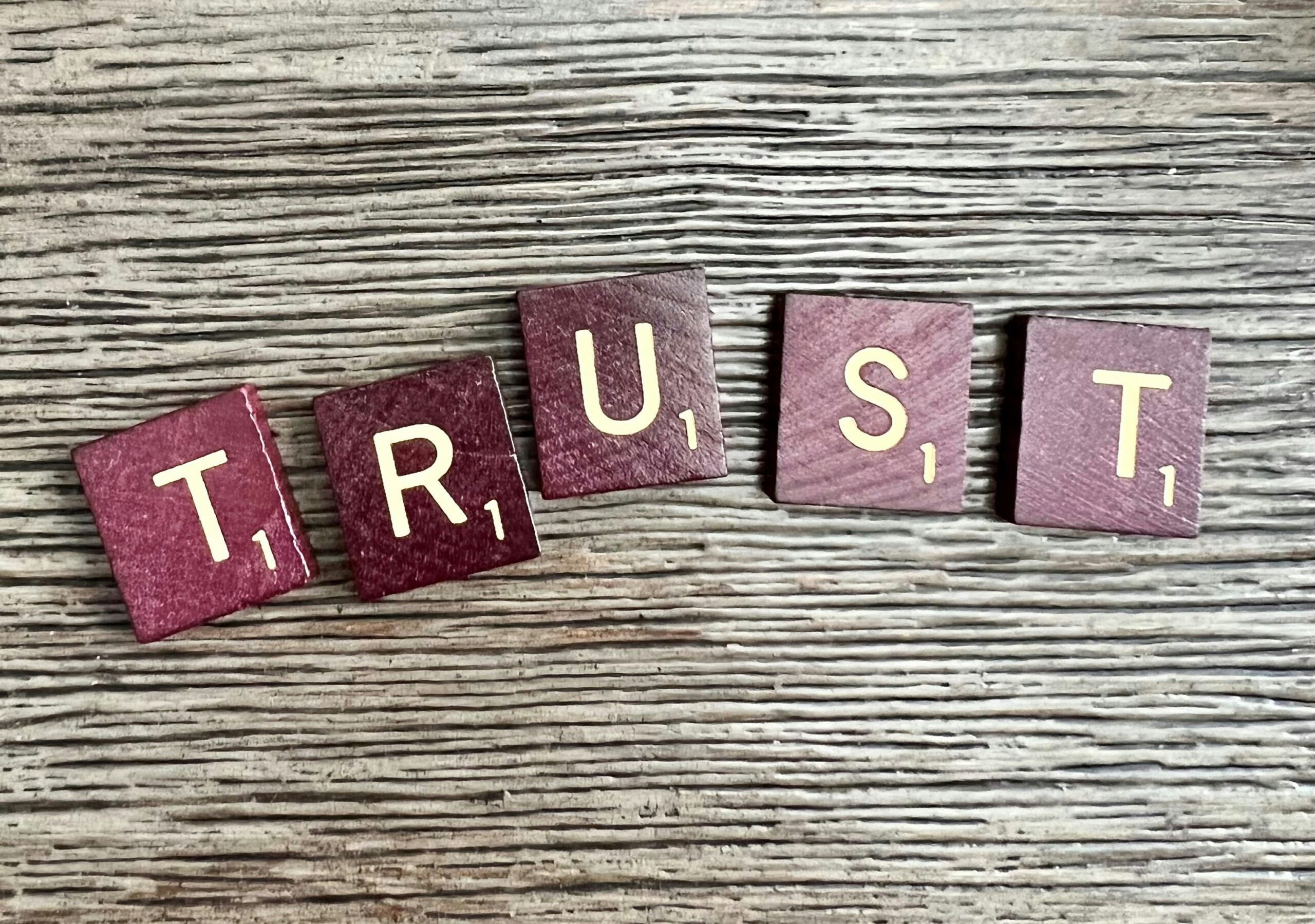
It’s about the loss of trust.
Over a now-nearly 30 year career in journalism, I have chronicled the decline of trust from Washington, D.C., to state capitals, to the local school board meetings in my hometown of Spotsylvania.
There is no simple through-line to explain why trust has begun to decline, and why that lack of trust in our fellow citizens seems to be accelerating. But there is a time we can point to when that shared trust began to unravel.
Just over a quarter century ago Robert Putnam published an academic treatise with a catchy title that chronicled the collapse of social interaction in America. The book, Bowling Alone, tracked the decline of social organizations and our participation in them beginning in the 1960s and 1970s. More important, he chronicled how our lack of social interaction – joining Bridge clubs, attending church or synagogue, participating in social organizations like lodges, signing petitions – was undermining the social fabric that held our society together.
One of the victims of that unraveling? Trust.
Since Putnam’s book, we have seen trust deteriorate everywhere. In teachers. In politicians. In journalists. In clergy. In the very institutions that ground our society. Readers can spin up their own examples – there is no shortage.
Gallup has been tracking declining trust for decades through its polling. For those who still place trust in polling, the numbers and trendlines are disturbing.
This issue of trust was front-of-mind as I read Bill Gates’ manifesto, The turbulent AI era is here. The choices we make now are critical, released on Wednesday. This roughly 6,000 word opus probably won’t change many minds, but it is different from so much of the conversation around AI and the data centers that power them in an important way.
It recognizes that there is no turning back, and that the choices we make today will determine whether this next step in the human story will prove mostly for the good, or lead us down a darker path.
Gates has some viable ideas about how we handle the choices before us. And as one who has been covering data centers and AI for about four years now, I hope these suggestions become part of our public discussions.
But these are less important than what Gates had to say at the very end of his writing.
“I rarely stop thinking about AI—not because I have all the answers, but because the questions it raises are too consequential to leave to a small group of technologists. Leaders across academia, business, government, and civil society all have a role to play in shaping what comes next.”
The challenges before us are consequential. And no one person or subset of people are going to solve them for us.
Rather, it requires all of us working together to figure out how we are going to handle our future.
Stopping data centers and AI in their tracks may sound appealing. Just hit pause, and let us figure it out.
It’s also idealistic and an avoidance tactic that keeps us from facing the real story.
“If someone had a credible plan for slowing down AI advances globally, I would likely support it,” Gates wrote. “However, I don’t think that’s going to happen. The geopolitical and economic incentives are pushing too hard to go full speed ahead.”
The solution? “To make sure we maximize the positive effects of this unprecedented technology and minimize the bad so we are better off overall, we need to understand both the benefits and the risks.”
To do that, we’re going to have to learn anew to trust.
That is the storyline to watch. For whether we choose to learn to trust and lean on one another will ultimately determine which side of the AI revolution we will land on. One that leads to a stronger, more just society? Or one that further divides and ultimately destroys the fabric that binds us?