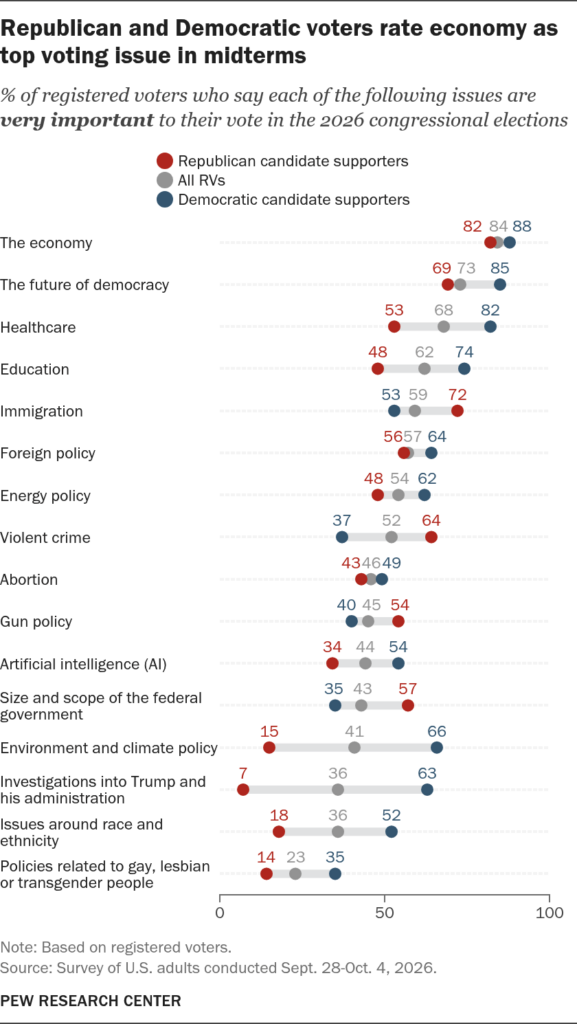
Voters don’t agree on much (even data centers, contrary to how some interpret the polling), but as Tuesday looms we do see them agreeing on affordability – the inability of people to stretch their incomes far enough to comfortably cover the costs of living.
That’s the conclusion of Pew Research, which earlier this month showed that affordability is not only the top issue voters name, but it’s an issue that Democrats and Republicans alike are concerned about. Eight-four percent of all respondents named affordability their greatest concern. Broken out along party lines, 82 percent of Republicans and 88 percent of Democrats name this their top concern.
It’s a rare topic of agreement that should could lead post-midterm to legislatures working across the aisle to address the problem.
Affordability, however, is a broad topic, so narrowing down where it is a challenge and what the leading indicators are matters. Earlier this week, the Urban Institute published the American Affordability Tracker, which explores the cost-of-living through the latest available data on earnings, household costs, and financial strain.
A review of its findings for Virginia help explain the pressures voters are experiencing.
1. Average Home Cost: National Average – $488,000, Virginia Average – $563,000
The high cost of housing is nothing new to Virginia, which as a state has consistently been above the national average for a decade. According to the Urban Institute, the commonwealth is among the ten-highest states in the country for housing costs. That pain is being made worse by interest rates, which as of writing stands at 7.31 percent. Not only is that rate locking out new buyers, but potential buyers are slow to bring their homes to market because they aren’t willing to swap their low-interest mortgages for a higher-interest one.
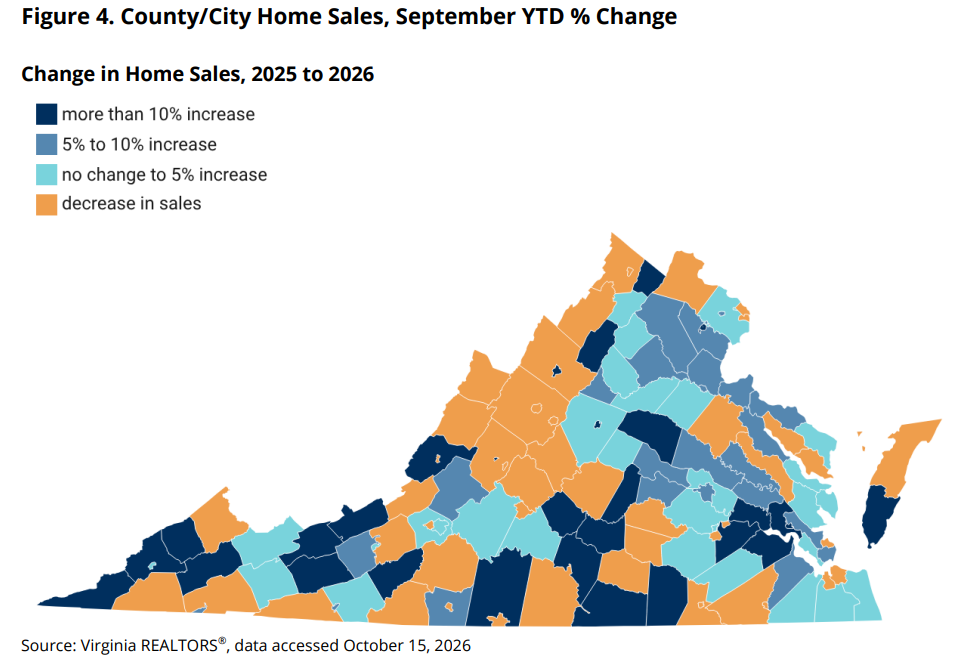
Virginia Realtors have reported that this past September marked the second consecutive month of declines in home sales. How acutely one feels the issue, however, depends in large measure on where in Virginia one lives.
Home sales activity running along I-95 from Northern Virginia to Richmond, and east along I-64 toward Norfolk remains robust. Pockets of southwest and southside Virginia are also seeing robust activity.
Virginia also ranks in the top 10 states for average rental costs. In the commonwealth, the average rent is now $2,050 per month. Nationally, it’s $1,950.
2. Average Cost of Childcare for Two Children: National Average – $23,900; Virginia Average – $28,200
As with housing, Virginia is among the most expensive states in the nation for childcare. The problem is caused by too few childcare slots, and an excess of families seeking childcare.
Research by the First Five Years Fund puts the number of children needing childcare at more than 580,000 in Virginia. That number reflects the high percentage of two-income households — 67 percent of children in Virginia live in homes where both parents are working.
The high cost is driven by the substantial lack of daycare slots in the commonwealth – a fact that in 2022, the Joint Legislative Audit and Review commission called out. At that time, it estimated that the commonwealth needed to create 140,000 slots to seriously address the need.
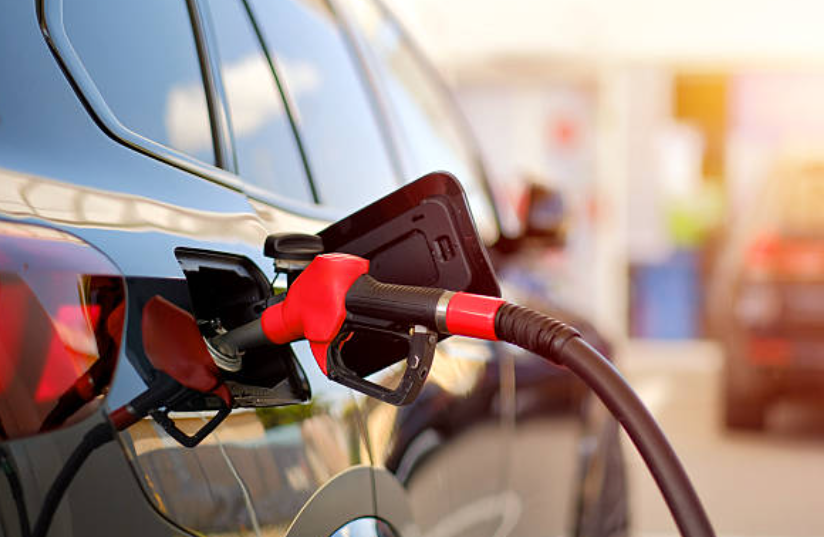
3. Average Cost of Gas: National Average – $4.21/gallon per AAA; Virginia Average $4.01/gallon per AAA
Fuel costs are volatile and regularly fluctuate owing to factors beyond the control of government. What has made fuel costs a frustration for voters is that the current high prices are directly tied to U.S. policy – in particular the war the Trump Administration launched against Iran
Gas prices for everyday drivers is a challenge, but it’s the cost of diesel that is driving broader cost challenges.
In September, the price of diesel fuel hit an all-time high of $6.51/gallon. As of writing, that number has fallen to $6.34, but this is still well-above historical averages. While most drivers don’t use diesel, the trucks and ships that deliver the goods we depend upon, do. And this cost is a factor in inflationary prices on many of the products people buy.
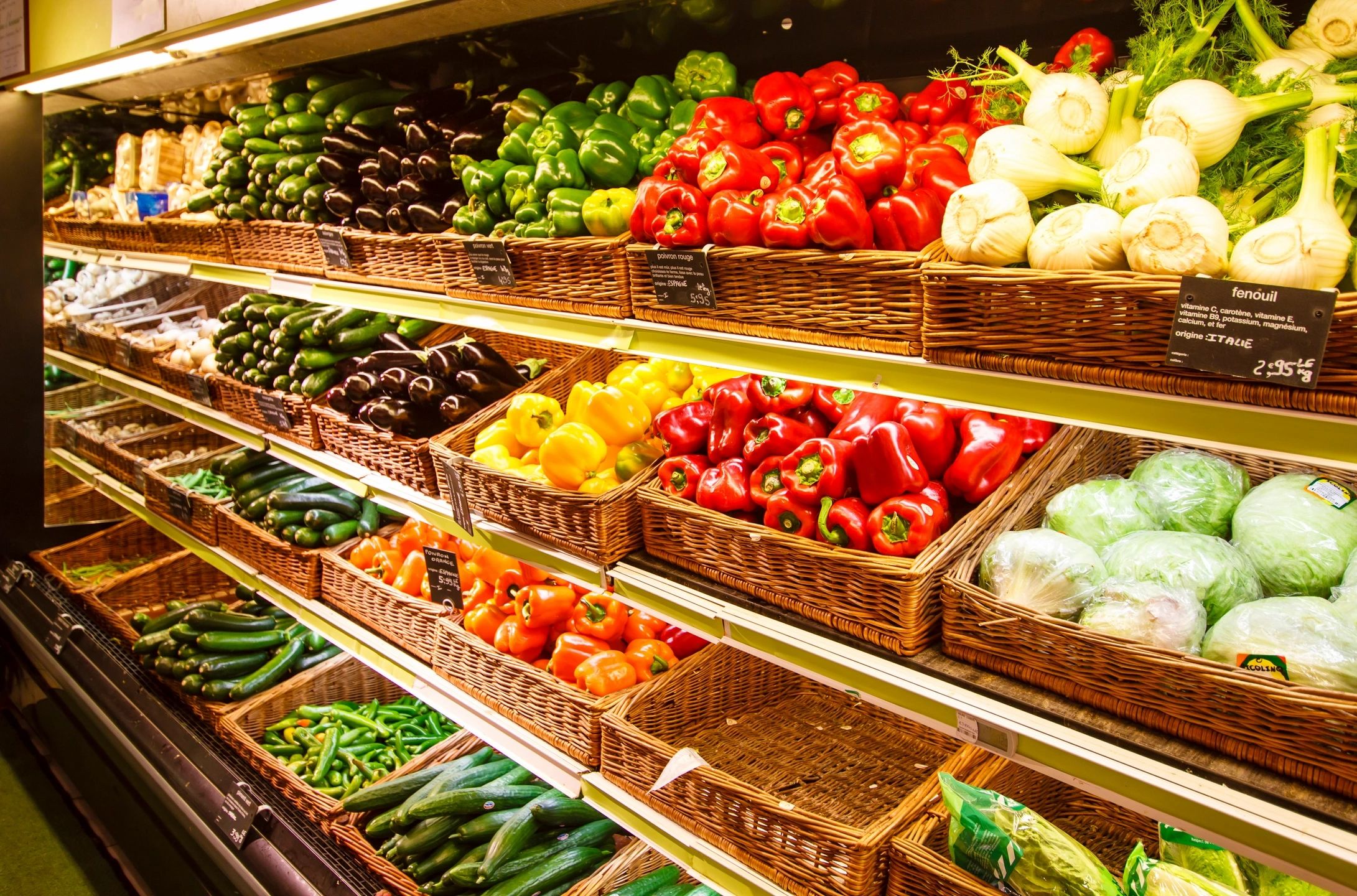
4. Average Grocery Prices: National Average – $1,060/month; Virginia Average $1,170/month
Tariffs and fuel costs are culprits in rising costs, but they aren’t alone.
A recent article in the Atlantic noted that between 2015 and 2019 average worker wages were growing about 30 times faster than food prices. Since the pandemic, that has flipped. “From 2021 through the end of last year,” the article noted, grocery prices increased faster than both overall inflation and wages. Today, the cost of food is about 30 percent higher than it was in January 2020.”
The upward pressure on food prices has led in some places a push for city-run stores and price controls. The challenge is that grocery stores run on very thin margins, rendering these options popular with voters but unlikely to bring down costs.
The challenge, the authors contend, are the middle-people in the food chain. The better solution, the authors contend, is a public option for food purchasing.
“The U.S. government already uses its buying power to purchase food directly from suppliers at low prices on behalf of military families and public schools,” the article says. “If the government decided to do the same on behalf of American consumers more broadly, the proposal’s authors argue, it could save the average family hundreds of dollars or more at the grocery store every year while costing taxpayers almost nothing.
How acutely families feel rising food prices also has to do with where they are purchasing food.
Recent data from the United States Department of Agriculture shows that the rate of price increases is down some from previous spikes, but prices are still up 1.8 percent year-over-year for food purchased at a grocery story. Food purchased in restaurants, however, is up 3.5 percent year-over-year.
5. Student Loan Delinquency Rate: National Average – 15.8%; Virginia Average 14.6%
Student loan payment delinquencies had been on a sharp decline even before COVID led to an effective pause on repayments. With the resumption of payments and the restructuring of that debt, delinquency rates have soared over the past year. Virginia’s delinquency rate is better than the national average, but the payments are creating a drain on younger people’s finances in particular.
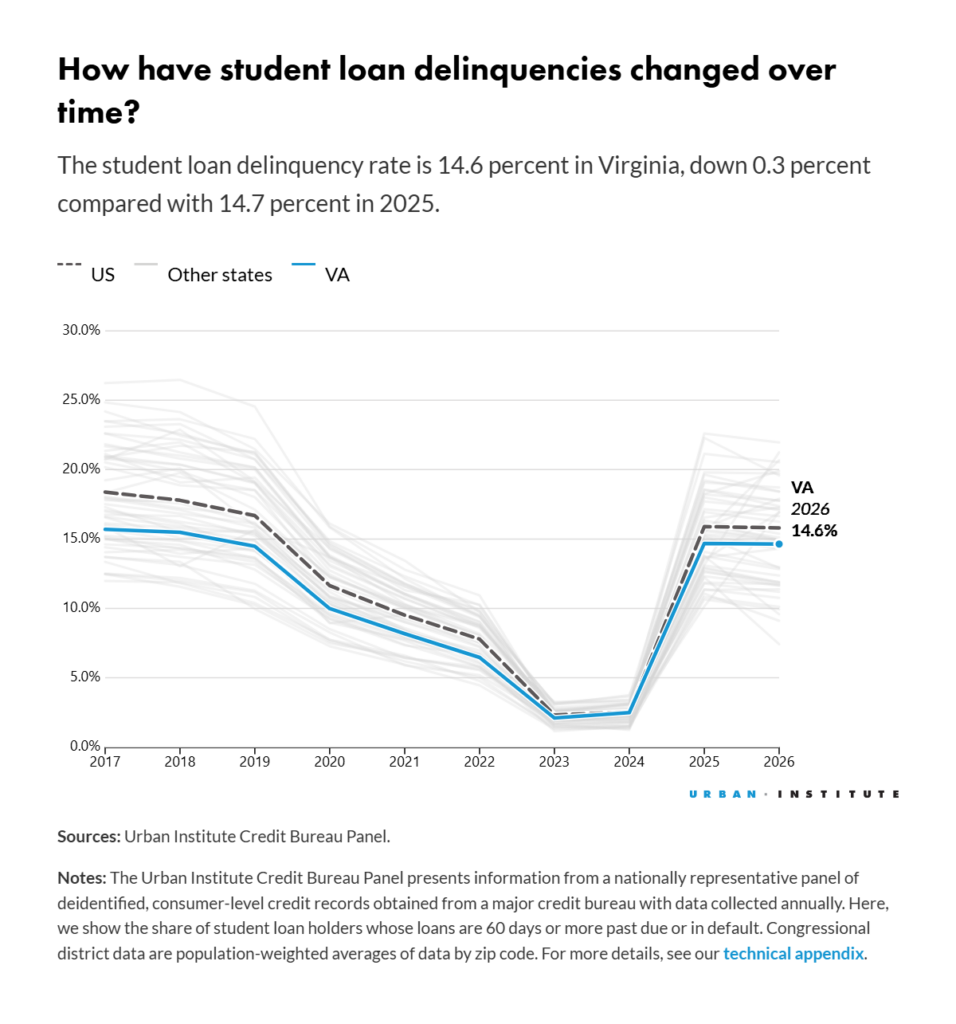
While the percentage of delinquencies is below the national average, there is concern that those percentages could rise. A recent WalletHub study found that the commonwealth ranks 12th among states with the most student debt.
6. Credit Card Delinquency Rate: National Average – 5.8%; Virginia Average 5.3%
As with student loan delinquency, Virginia is below the national average for credit card debt. But that rate is has been steadily rising since 2021.
Credit card delinquency is a lagging indicator, as people turn increasingly to credit cards to cover rising costs. In short, this rising rate reflects the strain that has been building on families since 2021.
Debt itself isn’t necessarily a bad thing for families to carry. However, there are indications that families are taking on debt to pay for core necessities. A recent study by NORC on Virginia hunger, for example, found that families are increasingly borrowing to cover the cost of food.
7. Auto Delinquency Rate: National Average – 5.5%; Virginia Average 5.8%
Another indicator of financially stressed households are auto delinquency rates. Virginia, at 5.8%, is slightly above the national average of 5.5%.
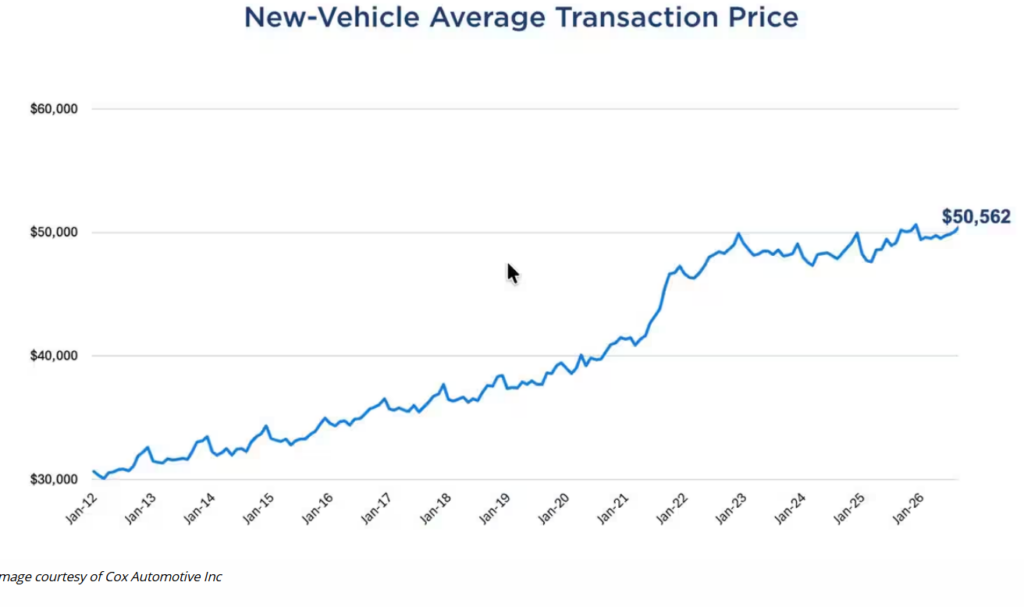
As with credit cards and student loans, the delinquency rate has been steadily rising since COVID. Coupled with the rising delinquency rate is the sharp rise in new car prices.
Kelly Blue Book reported this month that the average cost of a new car is now $50,562. That price has been rising steadily over the past two decades, but has accelerated since COVID.
 A Persistent Problem
The evidence suggests that there’s no one issue that is making people feel that they are behind the affordability curve, but a confluence of inflationary pressures in nearly every aspect of the economy are weighing down on voters. However, perspective matters, as many of the price rises have been ongoing for the better part of a decade. The sharp rise in energy prices likely is making people feel less secure in their household finances.
Tuesday’s midterm is both a referendum on the current White House occupant, as all midterm elections are, but it’s also a statement about how Americans as a whole are feeling about their financial well-being.
The challenge will not be resolved by a single election, though policy choices can improve things for people in places. Given that affordability issues have been growing growing for the better part of a decade suggest the issue is not likely to diminish post-election. It will likely also play a major role in the 2028 presidential election.