
In the world of politics, pollsters bear the same cross as football officials. No matter how they call it, they’re wrong in the eyes of the watchers.
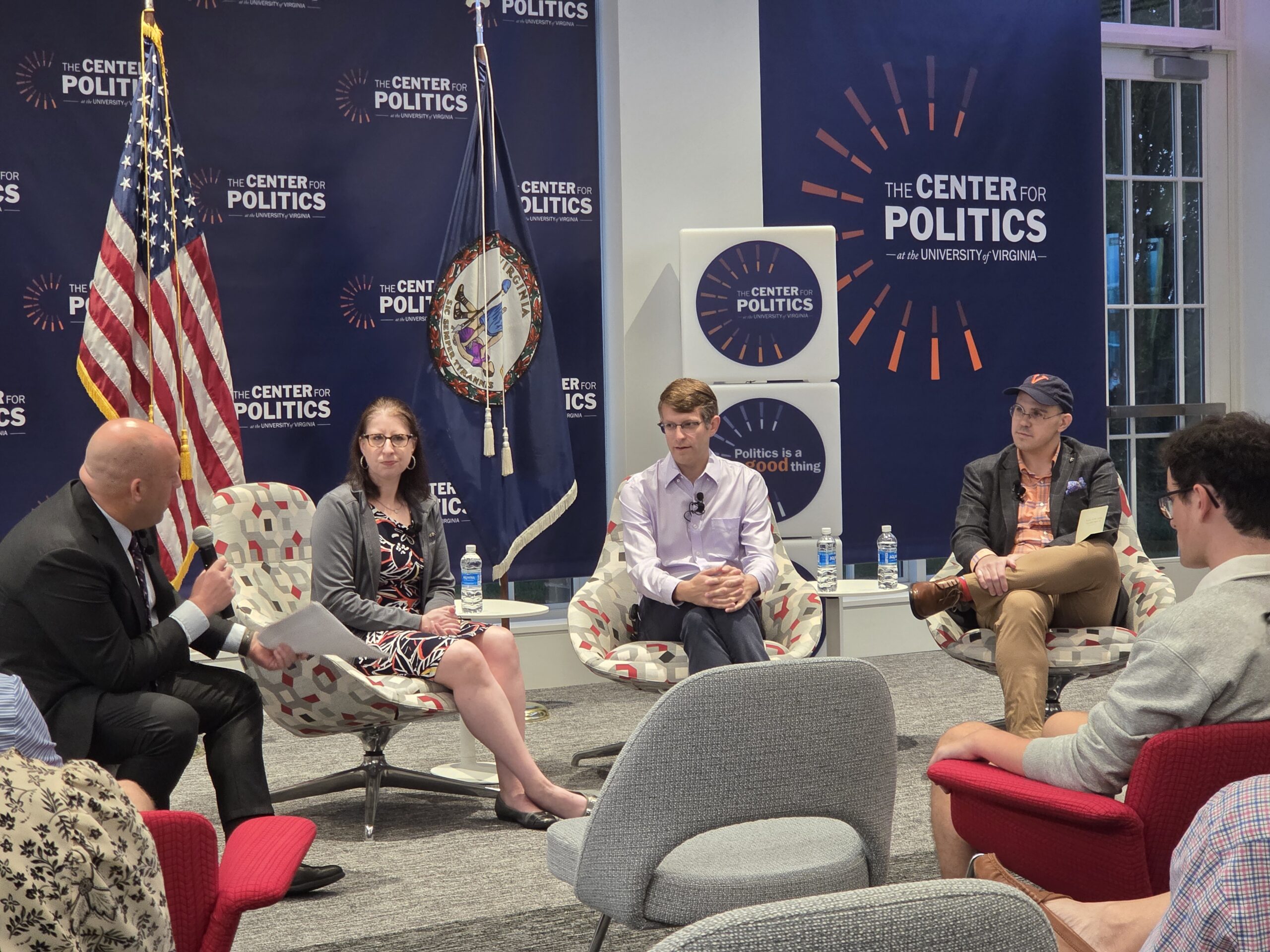
Despite this, polls remain popular and important both for voters and candidates seeking elections. The reason, Centerline pollster Natalie Jackson said Tuesday night while on a panel about the midterms at the University of Virginia’s Center for Politics, is that there is no better way to capture broadly what people are thinking.
Polling and Finding the ‘Right’ Voters
The challenges pollsters face in trying to capture public opinion are both complex, and ever-changing.
While pollsters since 2016 have struggled to adequately capture Republican voters who go for Donald Trump, Jackson noted this isn’t a new problem. In 2012, she said, polls underestimated Barack Obama. “We had some close national polling in 2012, with Romney leading in some of it.”
Why do pollsters miss? Part of the issue is “getting the right type of people in our polls,” Jackson said.
When pollsters are trying to get voters, she noted, they are talking about two things: “the number, just the percentage of the electorate, [and] getting that right; but also, what’s the type of voter we are getting?”
Getting the percentage right is a matter of matching the people polled to known demographic data.
But getting the right type of voter is more challenging.
This year, Jackson noted, the challenge is capturing both Republican voters who are angry and considering switching their vote, and the ones who are going to vote Republican regardless.
“If we’re not getting the correct balance within the category, we might be missing something,” she said.
As an example, she referenced a poll she had done not long ago looking at religion, and she noted that “white evangelicals were about half the proportion of the population they should have been.”
Nationally evangelicals are about 13 percent of people, her poll’s evangelical respondents were just 6 percent. “That’s a certain type of mostly Republican that votes all the time…. So why would they suddenly this year have dropped back? I don’t buy it, so I weighted them to where they should be. My poll is a D+8 on this generic ballot, so it’s just below where the averages are. It isn’t a huge difference, but it makes a big difference these pollsters make.”
The challenge of capturing voters emerges in other ways. Jackson said that when pollsters started sending text messages to people with a link to a poll, there was a belief that this would open the door to better capturing younger voters.
As it turned out, she said, “the modal text-to-web respondent is a middle aged Republican white man.”
Data Centers and the Midterms
There is little that seems to unite voters these days, but data centers and concerns over artificial intelligence (AI) are an exception.
In a relatively brief time – about a year – people have gone from being evenly divided on having a data center near them to 75 percent opposing.
That swing might lead one to believe that data centers and AI will play a major role in the upcoming elections, but Jackson doesn’t see it that way.
To understand why, it’s important to dig deeper than that topline number of 75 percent opposing data centers.
When one gets beyond the question of whether people would want a data center nearby, Jackson said, and start asking more detailed questions, voters are more likely to flip.
When pollsters ask how people feel about data centers if the company is paying for its utilities, and funds are being used to upgrade or build schools, “opinions change a lot,” Jackson said.
“In the polling that I have done,” she said, “about half of the people who opposed data centers can be flipped” when deals favorable to the company are being negotiated.
“What’s getting in the way of doing that,” she added, “is politics.”
Because of the shift in public opinion, data centers have become a campaign issue. So whether than working with companies to cut deals that would benefit communities, politicians are moving toward moratoria – cutting data centers off.
That’s “not going to work,” Jackson said, “because AI is not going away.”
“It’s a weird issue,” she said “that elections are actually making things worse.”
At the same time, it’s not an issue that is likely to affect how people vote all that much.
“I ran a test across 8 issues and said, … if you are voting for the Republican in Congress and you disagree on this one issue,” would you flip and vote for the Democrat? Data centers was one of the eight options presented, and “data centers was one of the least likely to have single-issue flipping.”
Voters to Watch
The panelists were asked if there is a particular group of voters they will be paying close to on Election Night. White women, Hispanics, and Southern voters have the eye of the panelists.
Jackson noted that white women are “the biggest swing vote in America,” and typically go 52 percent for Republicans, and don’t typically flip in favor of Democrats. “I’m curious if that is the year this happens.”
Nathaniel Rakich of Votebeat is looking to Latino voters. “It seems like from polling that they have come roaring back for Democrats, but I’ll believe it when I see it.”
He sees them as a key to win states like Texas and Florida.
Crystal Ball associate editor Miles Coleman is watching to see which geographic areas go against the tide, especially in the South.
He’ll be watching to see if Southern states that tend to be a bit poorer than northeastern states will realize greater Democratic gains more than their northern neighbors because of the impact of the economy on the region.