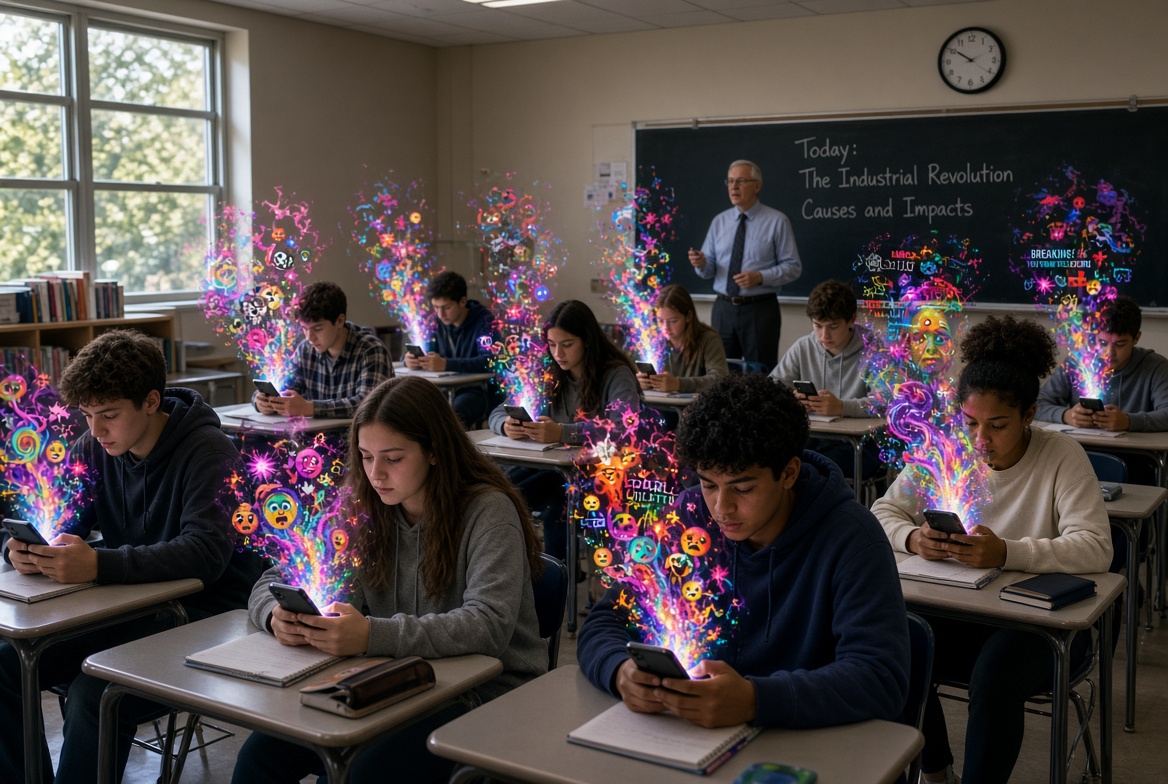
The news is abuzz with controversy surrounding data centers and Artificial Intelligence, or AI. The former faces opposition from people concerned about the impact data centers will have if built in their community. Their gravamen is that data centers will dry up their groundwater and pull so much power from the local electric grid that people won’t be able to charge their cell phones or tablets, much less stream their favorite programs on cable TV. Perish the thought that the gamers won’t be able, well, to game into the wee hours of the night. Damn those data centers.
Let’s face it. Data centers are ugly. Big suburban boxes in what is otherwise a verdant landscape of tract housing and shopping malls with “big box” stores that supply the beleaguered people of these regions with all manner of consumables and conveniences, including entertainment electronics—dependent on, you guessed it, data centers. But I digress.
A segment of the population could be called CAVE people: “Citizens Against Virtually Everything.” Many of them oppose data centers reflexively. But I suspect most people opposed to these suburban monstrosities are realistic. They understand that data centers are necessary if we want the computing power we will need in the years ahead to remain an economically dominant world power. They get it. They just don’t want a data center nearby. I can’t say I disagree. If one threatened my river environment, I would be very actively involved in opposing it. But like a hospital, I think we need them. Yet I don’t want to be next door to the Emergency Room entrance and the cacophony of sirens at all hours of the night.
The physical irritations over data centers notwithstanding, the anxiety over them belies a more fundamental concern: the role and impact of AI in our society, something data centers facilitate. People should have legitimate concerns about AI, particularly its potential impact on freedom. Privacy is often cited as a concern. But since the advent of the internet, people have long surrendered their privacy, personal data, internet usage, and even buying preferences to IT companies. If you doubt that, look at how many garden tips you get after buying a rake online. The most profound threat is that powerful entities, including governments, will use AI abusively to control lives, choices, and activities. That is a real concern, not one to dismiss casually.
Yet AI will greatly benefit society. Medical research, product productivity, public safety. air traffic control, structural design, mathematical calculations, infrastructure operations, and educational opportunities for countless people; AI will be decisive. That list is long. But there are threats. AI development can enable it to do things that could harm people. For that reason, we need controls. Fortunately, a few—a very few—people in Washington, DC, understand the need for guardrails.
That’s why the Frontier Act (H.R. 9925), a bipartisan congressional bill introduced on 23 July 2026 by Representative Jay Obernolte (R-CA) and Representative Lori Trahan (D-MA), should pass. It would establish (1) an AI risk-management framework, (2) independent audits, (3) AI incident reporting, (4) ongoing threat assessments, and (5) a uniform national standard for product transparency, auditing, and reporting of catastrophic risk to prevent a patchwork of state regulations. In other words, an approach to bring some rational order to the oversight of AI, a technology that will have a tremendous impact on everything from medical research to industrial efficiency to an explosion in American productivity that will, in turn, advance American wealth to levels never before witnessed. Indeed, by 2028, America could possess 80 percent of the world’s computing power.
Who does that threaten? China, that’s who. Which is why the communists have released disinformation bots to scare the pants off of Americans as they go to the polls in November. The Chinese have highlighted the connections between data centers and AI to frighten our citizens and stir up anxiety. Data centers are not the problem.
The “problem” is that China can’t keep up with the US. So, it’s doing its best to discourage US data center development that fuels the AI revolution. Predictably, the far left in America is parroting the Chinese lies to garner anti-GOP sentiment. No surprise there. They shilled for the Chinese Communist Party (CCP) during COVID.
If you think AI is the threat du jour, consider this. The Democratic Socialists of America (DSA) and their enabling establishment Democrats have adopted the communist propaganda line on AI. Democrats are no longer talking about “affordability” or the war in Iran. Yet consider their program to abolish the Senate, pack the Supreme Court, toss out the Constitution, seize private property, fling open the borders, and destroy the healthcare system.
You might see AI as a threat when the real one is the radical DSA-CCP agenda to destroy America.
SCOTT LINGAMFELTER is a former member of the Virginia House of Delegates, a retired U.S. Army colonel, and writer at Copybook Warrior.